Swamy Ayyappa Travels Owner Suresh Selvaraj on Why Discipline Beats Price Wars in Intercity Bus Operations

Swamy Ayyappa Travels owner Suresh Selvaraj explains how disciplined operations, premium positioning, and long-distance strategy are shaping a resilient intercity bus business from Salem.
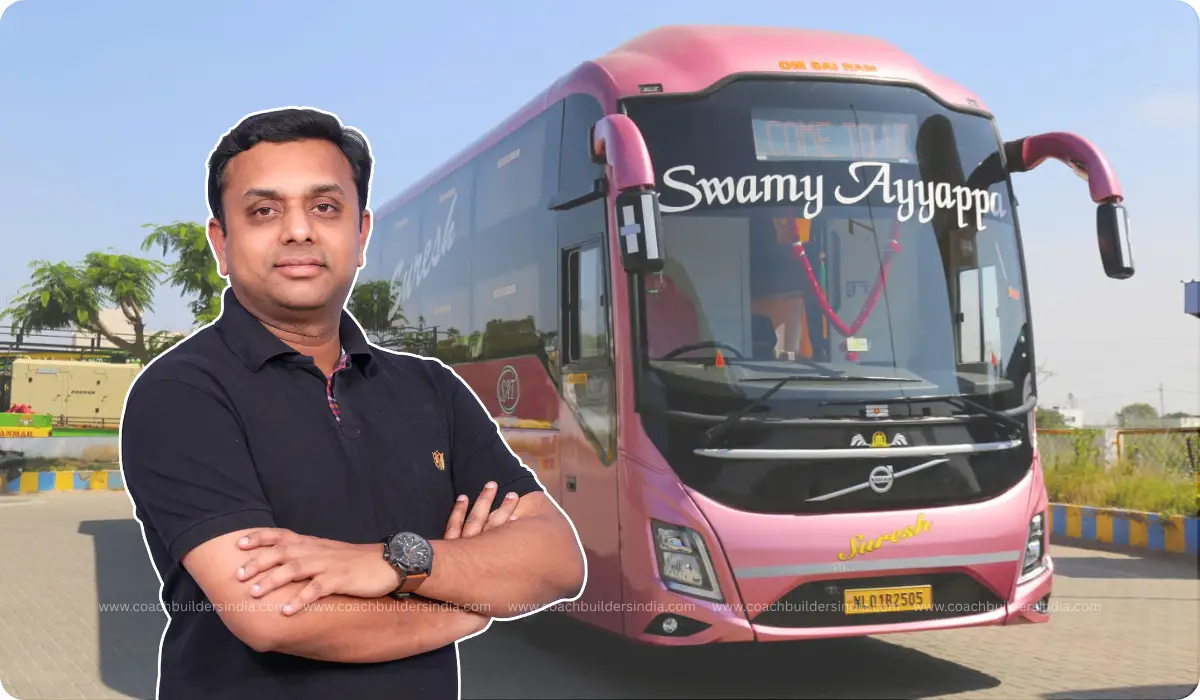
Operating in one of India’s most competitive intercity bus markets, Swamy Ayyappa Travels, headquartered in Salem, has built a reputation as a premium long-distance operator focused on consistency and service quality.
Founded in 2014, the company has steadily expanded across key southern corridors, prioritising reliability, passenger comfort, and disciplined operations over aggressive, volume-led growth.
Today, the operator runs a fleet of 75 buses across 26 intercity routes, connecting Tamil Nadu with Telangana, Andhra Pradesh, Karnataka, and Puducherry. Its services, often clocking over 700 kilometres daily, reflect a business model built on endurance and operational precision rather than short-haul expansion.
In conversation with Coach Builders India, Swamy Ayyappa Travels’ Managing Director Suresh Selvaraj explains how the company has stayed away from price wars and instead built a brand anchored in service differentiation and long-term discipline.
Excerpt from the interview: Suresh Selvaraj, MD, Swamy Ayyappa Travels
Can you tell us about Swamy Ayyappa Travels and how the brand has evolved?
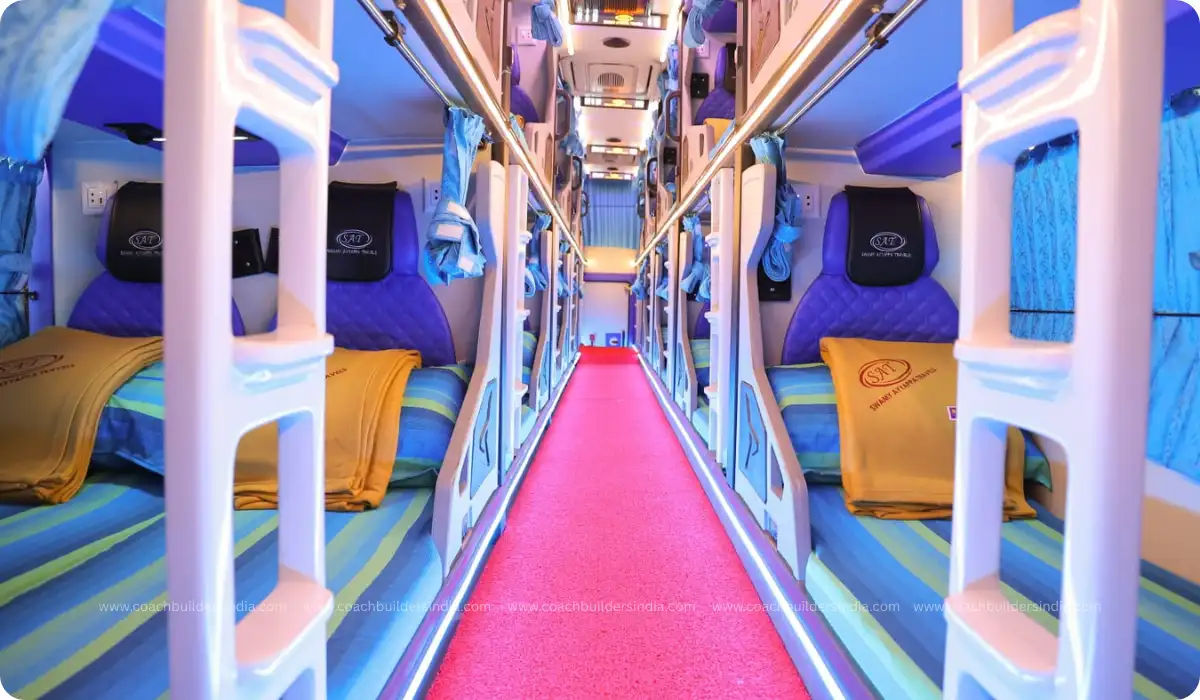
Established in 2014, Swamy Ayyappa Travels focuses exclusively on the luxury intercity segment, with a strong emphasis on long-distance sleeper bus operations.
We operate across Tamil Nadu, Telangana, Andhra Pradesh, Karnataka, and Puducherry, specialising in high-demand corridors with a fleet of 75 buses. Our fleet averages around 750 kilometres daily, and we have previously operated routes as long as Mumbai.
Our growth has come from service quality. We built trust by offering things that passengers value—complimentary meals, branded water, dedicated seating, and trained onboard staff.
More recently, we launched the ‘Captain Coach’ service, which focuses on consistency and comfort through a better onboard experience and attention to detail.
LeafyBus CEO Rohan Dewan on Intercity Electric Buses: Can They Really Be Profitable?
In a highly competitive market, how do you stay ahead without price wars?
We don’t track competitors closely; we focus on our own performance. I think that’s one thing that differentiates us from other bus operators.
By operating limited services on each route, we can monitor occupancy and pricing more effectively. Maintaining a healthy average selling price is important because costs, fuel, maintenance, and manpower have all increased. Underpricing might work temporarily, but it impacts service quality.
We’ve positioned ourselves as a premium operator, and our customers understand that. They are willing to pay slightly more for reliability and well-maintained buses.
For us, good reviews from passengers and passenger loyalty matter more than short-term discounts.
42 Years, 100 Buses, One Vision: Dharmasen Patil on the Evolution of Sangitam Travels
How do you manage fleet maintenance for long-distance operations?
Maintenance is critical, especially when vehicles travel such long distances daily, which is why we rely on technology for it.
We use customised software to track vehicle health, servicing schedules, and performance. Every day starts with reviewing job cards and maintenance records.
We’ve secured long-term AMC contracts from the beginning, ensuring support and consistency. Almost all our servicing happens through authorised dealers, which helps maintain quality and reduces breakdowns.
This structured system has significantly improved uptime and strengthened passenger confidence.
When evaluating new routes for expansion, what key factors do you consider before launching a service?
We rely on data, not assumptions. Before launching a route, we conduct month-long studies using online platforms and market data to assess existing services, occupancy, and actual demand.
But beyond numbers, we look at why people travel, such as for education, healthcare, or work. While high-visibility metro routes like Chennai–Coimbatore are attractive, we also prioritize Tier-2 city combinations where demand is stable and less saturated.
We also focus on routes where train connectivity is limited. That gives us a clear opportunity to offer a better alternative.
This approach helps us build sustainable routes rather than chasing short-term volume.
“Underpricing may win routes temporarily, but it rarely builds a business.”
What are the biggest challenges for bus operators today?
Price wars remain the biggest issue in the intercity bus industry.
New operators often enter with aggressive pricing, but this isn’t sustainable. Today’s passengers value reliability and cleanliness more than marginal price differences.
At the same time, costs have increased significantly. Since 2021, vehicle acquisition costs have risen by 30–40%, alongside higher tolls, wages, and maintenance expenses. But bus fares haven’t kept pace and hence margins are under immense pressure.
Navigating this imbalance between rising costs and static fares remains our most pressing hurdle.
Asish Luxuria: Turning Passenger Feedback into a Brand
What emerging trends do you see shaping the bus fleet industry in the coming years?
The Indian bus industry has strong growth potential, especially in intercity travel.
But it remains largely unorganised. Low entry barriers encourage investment but often result in inconsistent quality and a lack of operational discipline.
Despite these hurdles, the industry has evolved – modern buses today offer comfort and technology that can compete with other transport modes. If effectively organized, the sector could become a formidable alternative to short- and medium-haul flights.
The future will depend on how operators move from short-term pricing strategies to long-term, quality-driven models.
.webp?updatedAt=1776668165203 "Swamy Ayyappa Travels Owner Suresh Selvaraj on Why Discipline Beats Price Wars in Intercity Bus Operations")
If you could suggest one policy change to the government to support the private bus industry, what would it be?
Taxation reform is the most impactful change needed in the private bus industry. While the central government introduced the All India Tourist Permit for a single-point taxation framework, implementation is inconsistent as several states have yet to align with it.
For seamless interstate operations, all states must uniformly recognize this system. Current variations in state-level taxes create unnecessary complexity and costs. Furthermore, tax rates vary wildly across borders; a standardized, transparent framework would reduce uncertainty and allow operators to plan investments more effectively.
As public transport is the backbone of mobility, coordinated action between central and state governments is vital. Aligning taxation and permits will not only support operators but also enhance service quality and accessibility for passengers nationwide.
“Passengers are no longer choosing the cheapest bus—they are choosing the most predictable experience.”
Key Takeaway
Swamy Ayyappa Travels’ approach reflects a clear shift in the industry. Operators are moving away from price-led growth towards service consistency and disciplined operations.
At the same time, challenges like fragmented taxation and aggressive underpricing continue to limit long-term stability.
For new operators, the takeaway is simple – growth today depends less on fleet size, and more on how efficiently that fleet is run.
What Readers Want to Know About Swamy Ayyappa Travels
Where is Swamy Ayyappa Travels based?
Swamy Ayyappa Travels is headquartered in Salem, Tamil Nadu, and operates across major intercity routes in South India.
Who is the owner of Swamy Ayyappa Travels?
Swamy Ayyappa Travels is led by Suresh Selvaraj, who serves as the Managing Director of the company.
What type of services does Swamy Ayyappa Travels offer?
The company focuses on premium intercity bus services, particularly long-distance routes with air-conditioned luxury sleeper buses.
How large is the Swamy Ayyappa Travels fleet?
Swami Ayyappa Travels operates a fleet of 75 buses across 26 intercity routes, connecting Tamil Nadu with Telangana, Andhra Pradesh, Karnataka, and Puducherry.
Are Swamy Ayyappa Travels services well-reviewed by passengers?
While we couldn’t find Google reviews, Swamy Ayyappa Travels has built a strong reputation over time, with positive passenger feedback driven by reliability, comfort, and a consistent onboard experience.
Catch the latest Bus Industry updates, Exclusive Interviews, Bus News, and International Bus News on Coach Builders India. Download the latest issue of the The Bus Insider magazine for more insights.