Union Budget 2026 Sitharaman Proposes 4,000 Electric Buses for East India Industrial Corridor

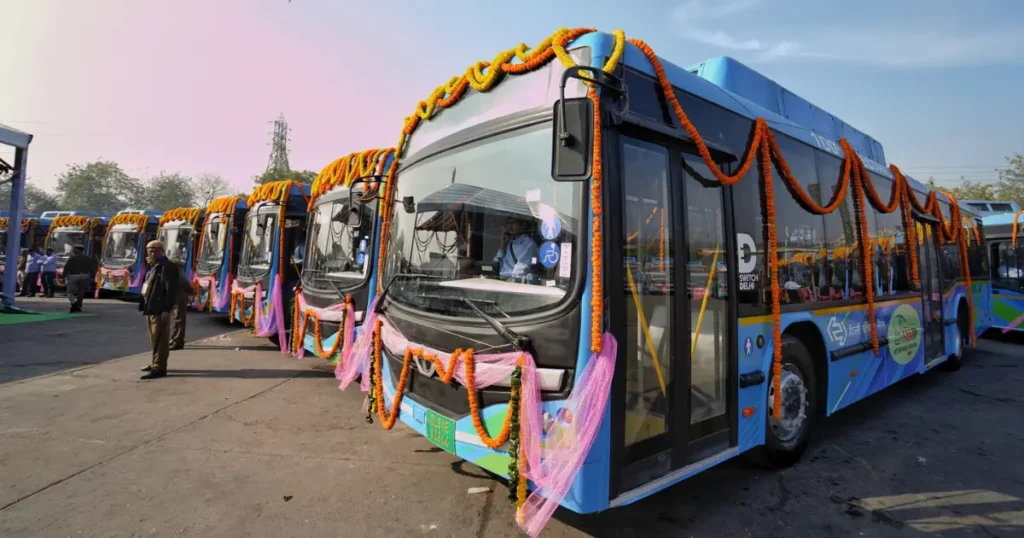
Finance Minister Nirmala Sitharaman has announced the deployment of 4,000 electric buses across five eastern states under the Union Budget 2026-27, reinforcing India’s push towards sustainable public transportation and regional infrastructure development.
The initiative forms part of the government’s “Purvodaya” programme aimed at strengthening economic growth in eastern India through improved connectivity and clean mobility solutions.
The proposed electric bus deployment will support the development of an Integrated East Coast Industrial Corridor, with Durgapur identified as a key node.
The project also includes the creation of five new tourism destinations across the region, which will be serviced by the proposed clean-energy bus fleet.
The move is expected to enhance last-mile connectivity, promote eco-friendly transport and stimulate economic activity across the targeted states.
The initiative builds upon the government’s ongoing electric mobility programmes, including the Pradhan Mantri e-Bus Sewa Scheme and the PM E-DRIVE Scheme.
Chartered Speed, EKA Mobility Secure LOCQ for 1,750 Electric Buses in Bengaluru
The PM e-Bus Sewa Scheme, launched in August 2023 with an outlay of ₹57,613 crore, aims to deploy 10,000 electric buses across 169 cities through a public-private partnership model.
Complementing this, the PM E-DRIVE Scheme, introduced in October 2024 with an allocation of ₹10,900 crore, provides ₹4,391 crore specifically for procuring 14,028 electric buses for state transport undertakings by March 2026.
To ensure financial stability and encourage private sector participation, the government has also introduced a ₹3,435.33 crore Payment Security Mechanism.
The scheme safeguards private operators against payment defaults by state authorities, addressing one of the major concerns in public-private electric bus deployments.
India’s electric bus sector has witnessed steady growth in recent years. The segment’s share increased from 4% in fiscal year 2024 to around 5% in fiscal year 2025.
As of July 2025, a total of 7,293 electric buses had been sanctioned across 14 states and four Union Territories under the PM e-Bus Sewa framework, reflecting the gradual expansion of clean public transport adoption nationwide.
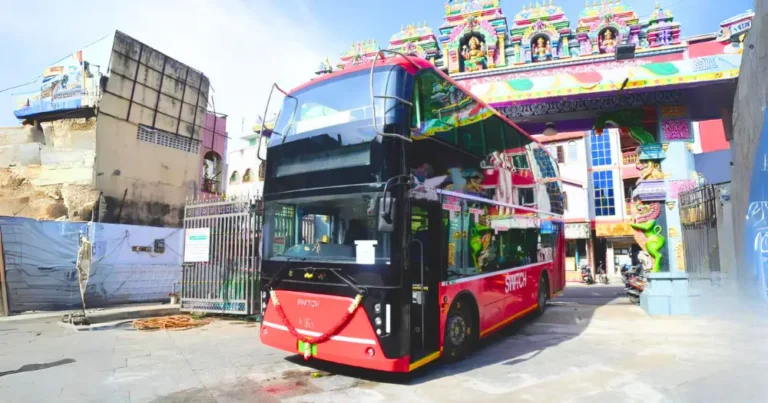
Industry capacity is also strengthening to support the projected growth. The top five manufacturers, Tata Motors, Olectra, JBM, PMI and Switch Mobility collectively hold nearly 88% market share and maintain a combined production capacity of over 40,500 electric buses annually.
In 2024 alone, electric buses accounted for 12.5% of the heavy passenger vehicle segment, with 3,616 units registered during the year.
Supporting infrastructure is being scaled up simultaneously. The government has already installed 8,885 public charging stations under the FAME-II scheme as of July 2025.
Additionally, the PM E-DRIVE scheme earmarks ₹2,000 crore to develop approximately 72,000 new charging stations across the country, aimed at strengthening nationwide EV infrastructure.
Industry forecasts suggest electric buses could account for 10–12% of India’s bus market by FY27 and potentially reach 15% by 2027.
However, experts note that sustained growth will depend on strengthening charging infrastructure, financing mechanisms and policy support for private fleet operators, who currently operate nearly 90% of India’s total bus fleet.
Catch the latest Bus Industry updates, Exclusive Interviews, Bus News, and International Bus News on Coach Builders India. Download the latest issue of the The Bus Insider magazine for more insights.