Manu Mahesh Reflects on Siddaganga Travels’ Three-Decade Journey, Growth and Transformation

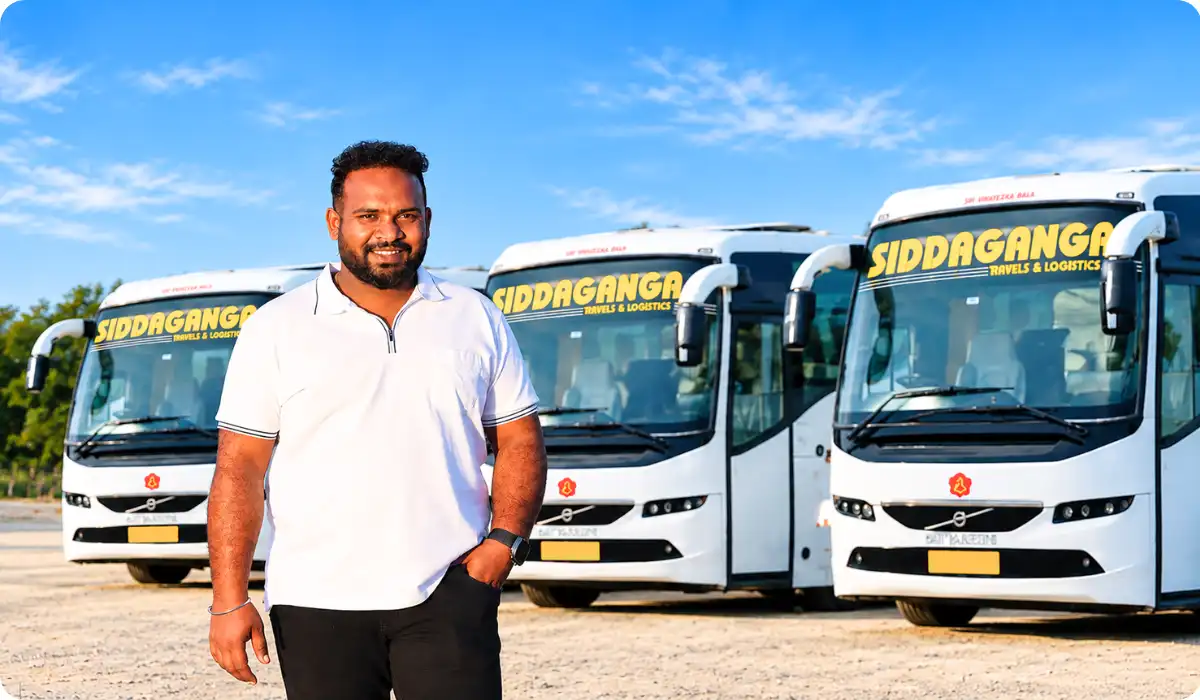
Siddaganga Travels and Logistics is approaching its 30th anniversary with a business that looks very different from the one A M Mahesh started with just two buses.
What began as a small tourist transport operation has grown into a diversified passenger mobility business spanning tourist, corporate and intercity operations. The Bengaluru-based company expanded to nearly 200 buses before the COVID-19 pandemic, rebuilt its fleet after the disruption and is now preparing for another phase of growth.
But the next chapter is not simply about adding more buses.
For Siddaganga, technology, automation, fleet quality and operational discipline are becoming increasingly important to how the business scales. The company has developed an in-house customer application, built internal systems for operations and maintenance, and is exploring electric buses and a dedicated asset-leasing model.
From Two Buses to Nearly 200
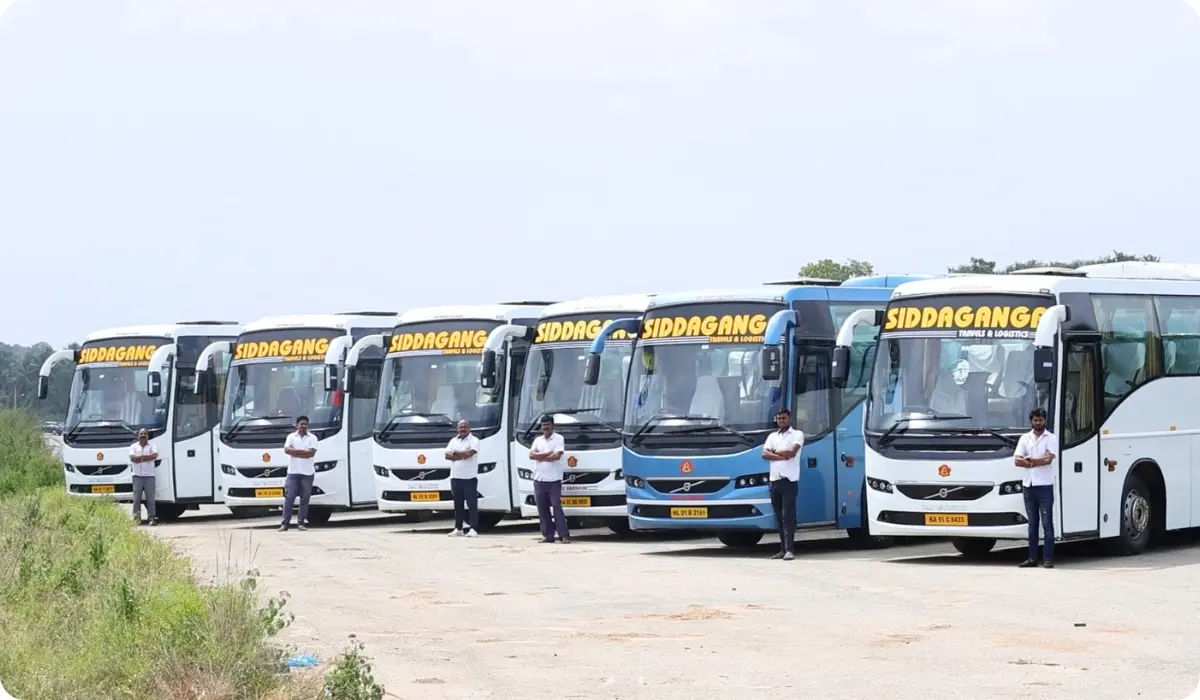
Siddaganga Tours and Travels began operations around 1995 and was formally established in 1997 by A M Mahesh.
His journey into the business was itself rooted in operations. He started his career as a driver, developed his own customer base and gradually built a tourist transport business around it. His uncle, A M Shivakumar, later joined as a co-owner.
The company grew steadily, with reliability and passenger experience becoming central to the way it operated. From two buses, Siddaganga eventually built a fleet of nearly 200 buses before the pandemic. COVID-19, however, forced the company to start again.
When operations resumed in 2021, Siddaganga restarted with around 70 buses. It was also the point at which Manu Mahesh returned from the UK and joined the family business.
The company was rebranded as Siddaganga Travels and Logistics, marking what Mahesh describes as a new chapter focused on the fleet, operations and technology. The experience also reinforced something that has remained central to the business.
“Three decades later, our biggest achievement is not the number of buses we have, but the trust we have built with our customers. In a business where reliability, service consistency and passenger experience determine long-term relationships, that trust is what gives us the foundation to grow into the next phase.”
Manu Mahesh, Partner, Siddaganga Travels and Logistics
Why Siddaganga Entered Intercity Operations
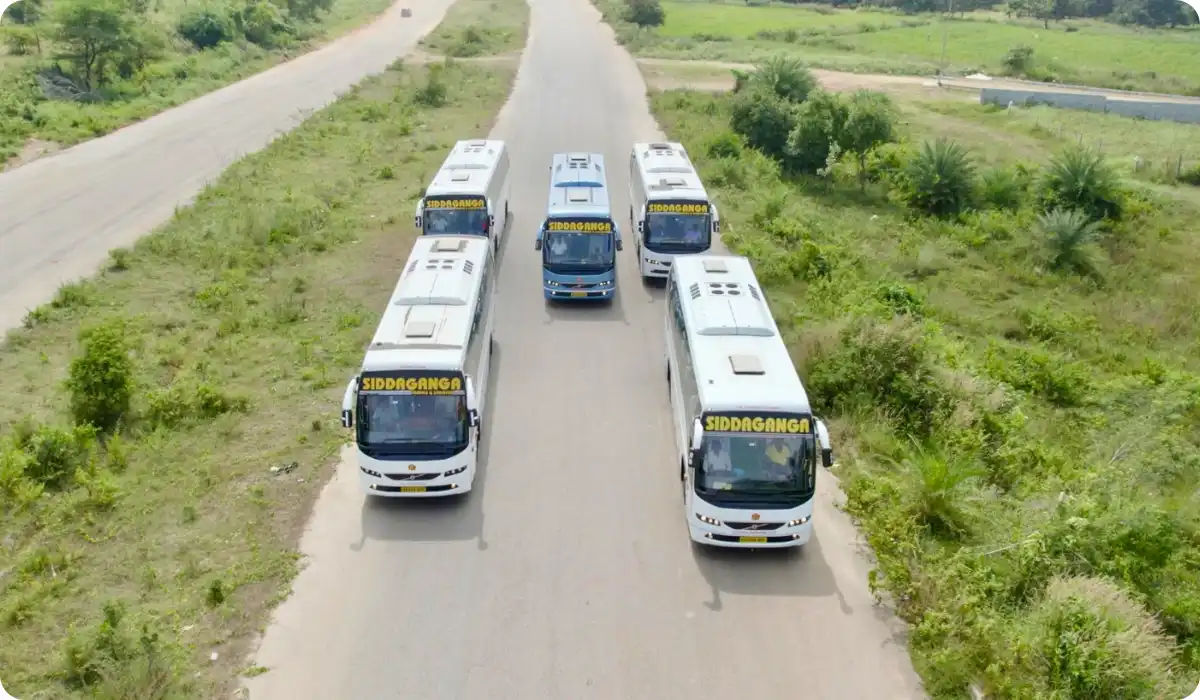
Tourist transportation remained the company’s foundation, but Siddaganga began looking at intercity operations in 2018.
The trigger was the arrival of aggregators and the emergence of new operating models. Rather than viewing intercity as an entirely new business, Siddaganga saw an opportunity to apply its existing operational experience to fixed routes.
“We looked at it primarily as a leasing business,” explains Manu Mahesh.
The company already had around 18 years of experience, along with people, systems and operational infrastructure. The Minimum Guarantee model also provided greater revenue visibility, making the risk of entering intercity operations more manageable.
That approach allowed Siddaganga to enter a new segment without abandoning the operational capabilities it had built through tourism. It was less about starting from scratch and more about adapting an existing business model to a different application.
Trust Over Marketing
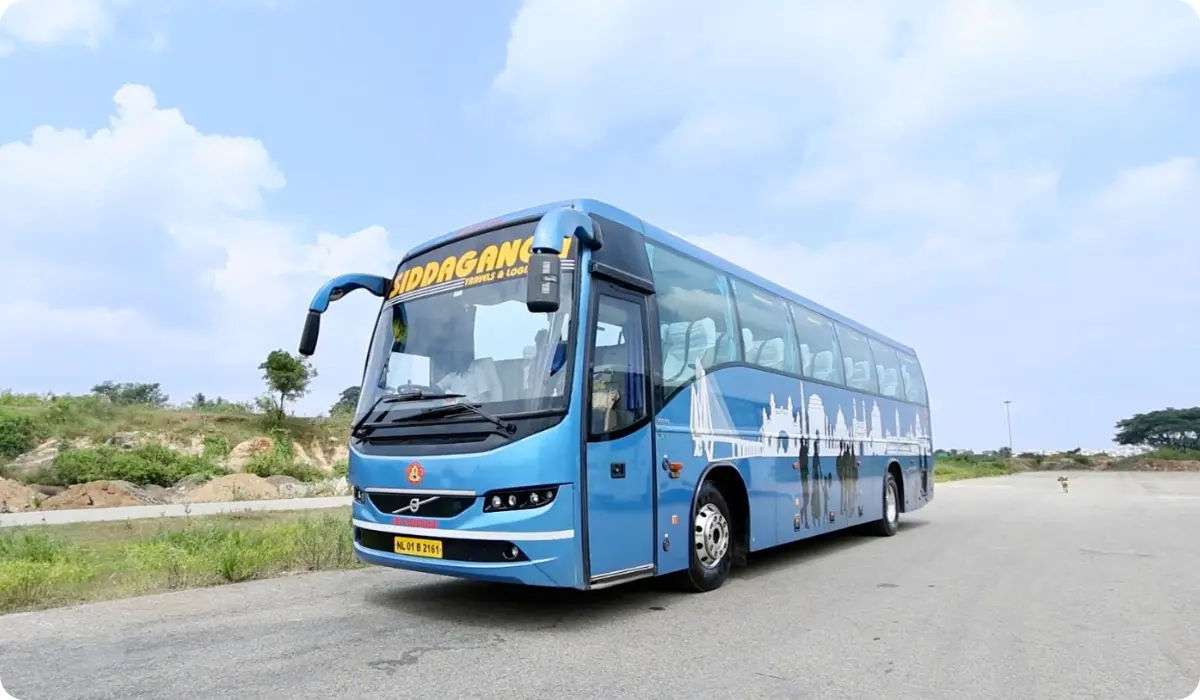
In a market where operators increasingly compete on routes, pricing, fleet age and passenger experience, Siddaganga’s approach to differentiation is relatively straightforward.
It does not actively try to differentiate itself. Instead, the company focuses on doing the basics consistently well. Its reputation has been built around reliability and passenger experience, particularly in the corporate segment. According to Mahesh, some customers specifically prefer Siddaganga buses and are reluctant to operate without them.
The company has also deliberately positioned itself towards the premium end of the market.
Its buses are maintained with a focus on cleanliness and quality interiors, while driver training remains an important area of investment. Siddaganga also follows a four-to-five-year replacement cycle for its buses.
Its tourist operations support this strategy because relatively lower annual mileage allows the company to maintain a younger fleet.
For an operator, fleet age is more than a specification. It directly influences maintenance, passenger perception and the overall experience delivered to customers.
Technology Is Becoming the Next Growth Engine
One of the biggest changes underway at Siddaganga is the increasing role of technology.
Historically, much of the business was highly hands-on. The founders personally inspected new vehicles and remained closely involved in operations. That approach helped maintain control, but it becomes harder to sustain as a business grows.
Technology is now being used to create a more scalable operating structure.
Siddaganga has developed an in-house mobile application through which customers can browse different vehicle categories and book them according to their requirements. The platform works with both Siddaganga’s own fleet and vehicles operated through its agents.
The application is already live through the company’s website, with a formal launch planned. Behind the customer interface, Siddaganga has also developed an internal system that manages operations and maintenance processes end-to-end.
The objective is not technology for its own sake. It is to create better visibility, stronger data and more control over an increasingly complex operation. For a company entering its fourth decade, that shift could be significant.
Expansion and the Electric Opportunity
Expansion remains firmly on Siddaganga’s agenda.
The company is looking at new markets and opportunities, but the emphasis is on building the systems required to support that growth sustainably.
One of its latest initiatives is an association with FlixBus, which began in September. Siddaganga is currently operating 16 new BharatBenz buses as part of this association, with further developments expected.
At the same time, the company is evaluating electric mobility.
Siddaganga is exploring entry into the electric vehicle segment and is also developing a platform that could eventually allow the business to operate as a dedicated asset-leasing company.
Both initiatives point towards a broader evolution in the way the company views its role in passenger mobility.
The focus is no longer only on owning and operating buses. Data, fleet management, technology and asset utilisation could become equally important parts of the business.
But Mahesh says the foundation has to come first. “For us, the priority is to get the data and systems right first. Once that foundation is in place, we can scale with greater confidence,” he adds.
The Operating Philosophy Remains the Same
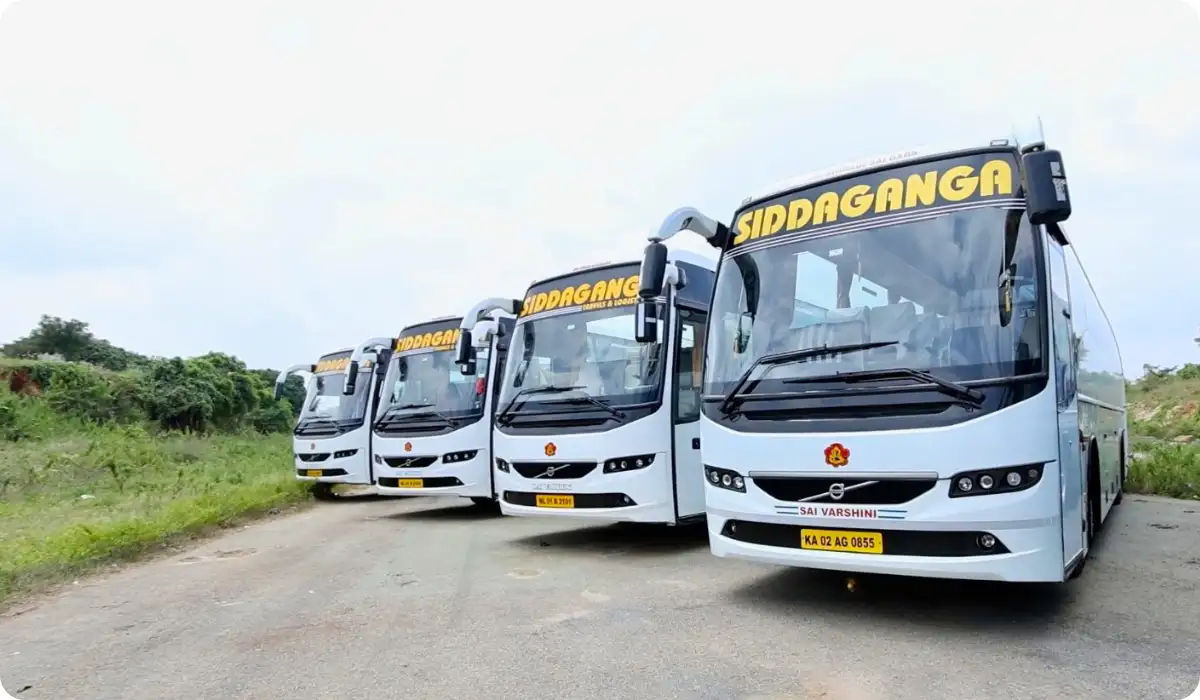
Despite the changes in technology and business models, Siddaganga’s underlying philosophy has remained relatively consistent.
Customer focus remains one of its biggest priorities. The company says it has historically built its operations around customer feedback and evolving its services based on what passengers and clients actually need.
Technology has become a more recent pillar.
After joining the business, Mahesh spent around three years studying the company’s operations and developing technology intended to improve efficiency and prepare the organisation for its next stage.
The third pillar is operational control.
Siddaganga keeps its maintenance and day-to-day operations in-house. Customer issues are also handled directly by the owners rather than being routed entirely through call centres.
That direct accountability is particularly important in a business where service failures can happen outside conventional working hours.
“If there is a problem, even late at night, it does not simply go through a call centre. We take responsibility and handle it ourselves,” Mahesh says.
As Siddaganga approaches 30 years, that combination of customer focus, operational control and fleet discipline is now being paired with something the company did not have to the same extent when it started: technology.
The next phase, therefore, may not be defined simply by how many buses Siddaganga adds.
It could be defined by how efficiently the company can manage them, how intelligently it can use its data and how effectively it can scale its operating model without losing the trust that built the business in the first place.
Catch the latest Bus Industry updates, Exclusive Interviews, Bus News, and International Bus News on Coach Builders India. Download the latest issue of the The Bus Insider magazine for more insights.