PM-eBus Sewa Scheme: 10,000 Electric Buses Sanctioned Across 116 Indian Cities

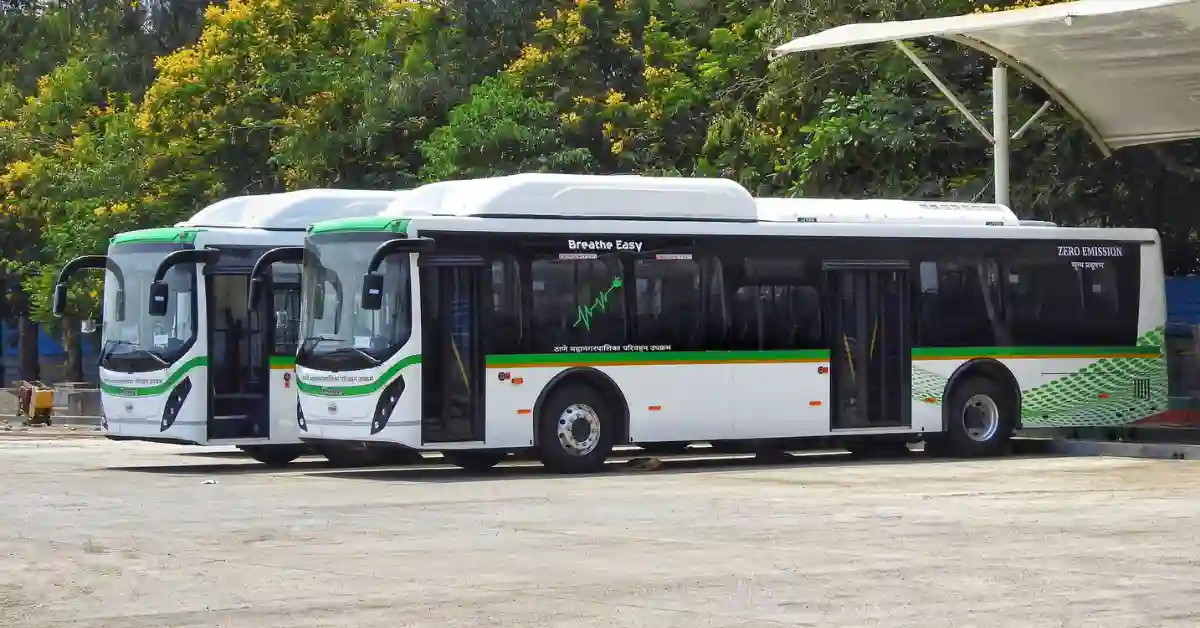
India has sanctioned 10,000 air-conditioned electric buses across 116 cities in 20 states and 6 Union Territories under the PM-eBus Sewa Scheme, according to a written reply in the Lok Sabha by Minister of State for Heavy Industries Bhupathiraju Srinivasa Varma.
The scheme, implemented by the Ministry of Housing and Urban Affairs (MoHUA), focuses on expanding organised bus transport in mid-sized cities while accelerating the transition toward electric mobility in urban public transport.
PM-eBus Sewa Scheme Overview
The PM-eBus Sewa Scheme aims to strengthen urban transport by deploying 10,000 air-conditioned electric buses in cities with populations between 3 lakh and 40 lakh.
The programme also includes:
- Clusters of smaller adjoining statutory towns
- State capitals
- Capital cities in North-Eastern and hilly regions with populations below 3 lakh
The initiative is intended to address gaps in urban bus transport systems in India.
Key objectives include:
- Around 30% of participating cities are introducing organised public transport for the first time
- About 80% of participating cities are transitioning to e-mobility for the first time
Rajasthan Plans Electric Double Decker Buses For Jaipur, Jodhpur And Udaipur
Infrastructure Support Under the Scheme
The scheme provides financial assistance for the associated infrastructure required for electric bus operations.
Key provisions include:
- 100% financial support for Behind-the-Meter (BTM) power infrastructure for charging e-buses
- Sanction of more than 200 infrastructure proposals, including civil depot construction and power infrastructure
- Approval of over 500 circuit kilometres of High Tension (HT) power line infrastructure
- Depot construction sanctioned across more than 300 acres of land
As of December 2025:
- ₹1,254.38 crore has been sanctioned for infrastructure
- ₹483.70 crore has been spent
The funding covers BTM power infrastructure and civil depot infrastructure required to support electric bus operations.
State-Wise Infrastructure Sanctions and Spending
Infrastructure funding has been distributed across 17 states and UTs under the scheme.
The total sanctioned and spent amounts are:
| Category | Amount (₹ Crore) |
| BTM Infrastructure Sanctioned | 706.16 |
| Civil Infrastructure Sanctioned | 548.22 |
| Total Sanctioned | 1,254.38 |
| BTM Infrastructure Spent | 398.4 |
| Civil Infrastructure Spent | 85.29 |
| Total Spent | 483.7 |
Among states, Maharashtra has received the highest infrastructure sanction of ₹370.49 crore, with ₹200.18 crore already spent.
Other states with significant sanctioned amounts include:
- Bihar – ₹112.46 crore
- Rajasthan – ₹102.11 crore
- Andhra Pradesh – ₹95.59 crore
- Odisha – ₹88.16 crore
Several states, such as Haryana, Karnataka, Meghalaya, Puducherry, and Uttarakhand, have yet to record expenditure, indicating that infrastructure development is still in early stages.
KMRL Launches Data Analytics Dashboard To Track Feeder Bus Performance In Kochi
State-Wise Electric Bus Sanctions
The 10,000 buses sanctioned under the scheme are distributed across 116 cities.
States receiving the highest allocations include:
- Maharashtra – 1,609 buses across 22 cities
- Rajasthan – 1,150 buses across 9 cities
- Andhra Pradesh – 1,050 buses across 11 cities
- Madhya Pradesh – 972 buses across 8 cities
- Gujarat – 750 buses across 8 cities
- Karnataka – 750 buses across 10 cities
Among Union Territories, Chandigarh has received 428 buses, one of the highest allocations for a single city under the programme.
City Spotlight: Jabalpur
A city-level example of the scheme’s implementation can be seen in Jabalpur in Madhya Pradesh.
Under the scheme:
- 200 electric buses have been sanctioned for Jabalpur
- A concession agreement was signed on February 12, 2026
Infrastructure funding details:
| Category | Amount (₹ Crore) |
| BTM Infrastructure | 6.3 |
| Civil Infrastructure | 4.18 |
| Total Sanctioned | 10.48 |
A mother sanction of ₹8.40 crore has been issued:
- BTM – ₹6.30 crore
- Civil – ₹2.10 crore
However, no buses have become operational in the city yet, indicating that deployment is still in the preparatory stage.
Significance for Urban Transport
Many Indian cities, particularly mid-sized urban centres, lack organised bus systems. The PM-eBus Sewa Scheme addresses this gap while accelerating the transition to cleaner mobility.
By combining electric bus deployment with full funding for charging infrastructure, the programme reduces the financial barriers faced by cities adopting electric public transport.
The scale of the initiative includes:
- 10,000 electric buses
- 116 cities across 20 states, 6 Union Territories
- More than 300 acres of depot land sanctioned
- Over 500 circuit kilometres of HT power infrastructure
Catch the latest Bus Industry updates, Exclusive Interviews, Bus News, and International Bus News on Coach Builders India. Download the latest issue of the The Bus Insider magazine for more insights.