Maharashtra Transport Strike Begins: Buses, Trucks and School Transport Halt Services

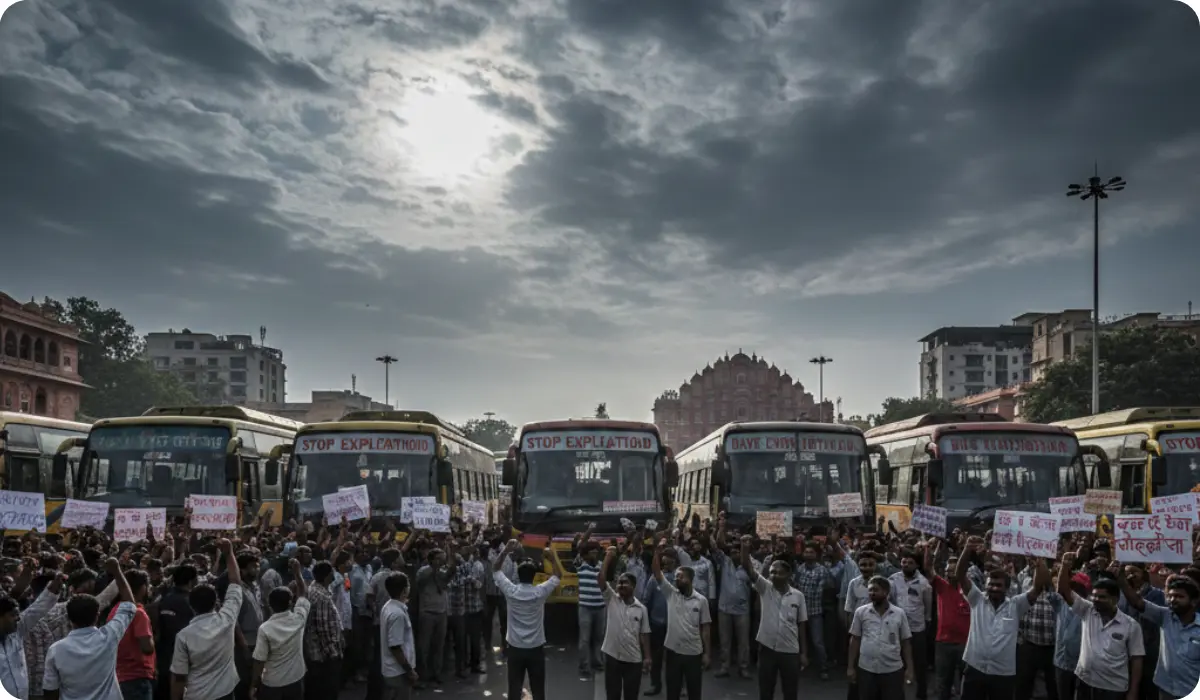
Maharashtra witnessed major transport disruptions on March 5 after the Maharashtra Transporters Action Committee launched a statewide strike, bringing trucks, school buses, private buses, tankers, and other commercial vehicles off the roads.
The indefinite protest has affected passenger mobility and freight movement across the state after talks between transport unions and officials from the transport department failed to produce a written agreement on key demands.
The strike was announced after negotiations with the state transport department and the Transport Commissioner ended without resolution, particularly over the enforcement of the e-challan system and other regulatory concerns raised by transport operators.
Who Called the Strike
The strike has been organised by the Maharashtra Transporters Action Committee, a coalition representing multiple transport associations across the state.
One of the key leaders associated with the protest is Malkit Singh Bal, advisor to the Maharashtra unit of the All India Motor Transport Congress.
According to union leaders, the decision to go on strike was taken after negotiations with the transport department and the Transport Commissioner failed to resolve long-pending issues.
42 Electric buses to grace the streets of Vadodra by March End
Who Is Participating in the Strike
The protest involves a wide range of transport operators across Maharashtra.
Passenger transport affected
- School buses
- Private contract buses
- Tourist buses
- Office employee transport buses
Goods transport affected
- Trucks
- Tankers
- Tempos
- Trailers
- Logistics vehicles
Some taxi and autorickshaw unions have taken a mixed stand on the protest. Leaders of certain city-based unions have indicated that their members may not fully participate, meaning the availability of taxis and autos may vary across cities.
Why the Maharashtra Transport Strike Happened
The primary trigger for the Maharashtra transport strike is opposition to the state transport and traffic authorities’ current e-challan enforcement system.
Transport unions claim the system is being used to impose arbitrary penalties and that many challans are issued without proper evidence.
According to transport leaders, operators have received fines for alleged traffic violations even when their vehicles were not present at the reported location.
The unions argue that the digital enforcement mechanism has created significant financial pressure on drivers and fleet owners.
Union representatives have described the situation as excessive enforcement that targets commercial vehicle operators already struggling with rising fuel prices and operating costs.
Major Demands of Transporters
Transport unions have submitted several demands to the Maharashtra government and say the strike will continue until they receive a written Government Resolution addressing them.
1. Reform of the E-Challan System
The most important demand is a comprehensive reform of the e-challan mechanism.
Transporters want:
- Cancellation of disputed and unjust challans
- Withdrawal of old or time-barred penalties
- Removal of the rule requiring a 50% fine deposit before challenging a challan in court
- Mandatory photographic proof for every traffic violation
Union leaders argue that enforcement must be transparent and supported by clear evidence.
2. Suspension of “No Parking” Fines Without Infrastructure
Transport associations say commercial vehicles are frequently fined for “No Parking” violations in areas where there are no designated parking zones or loading spaces.
Their demand includes:
- Temporary suspension of such fines
- Creation of a proper parking infrastructure for trucks and commercial vehicles
- Development of cargo loading and unloading zones
3. Closure of Border Check Posts
Another key issue raised by transporters is the continued functioning of border check posts.
Transport unions claim these checkpoints cause delays and increase operational costs.
They want the government to formally close them through an official government order to simplify the interstate movement of goods vehicles.
4. Notification Regarding Vehicle Cleaners
Transport associations are also seeking immediate clarification on the regulatory framework related to vehicle cleaners (helpers working with truck drivers).
The government has reportedly indicated that a notification may be issued soon, but transport unions want formal confirmation and clear guidelines.
5. Dedicated Transport Tribunal
Transporters have demanded the creation of a specialised tribunal or judicial mechanism to deal with transport-related disputes such as challan cases and regulatory conflicts.
According to union representatives, regular courts take too long to resolve such cases, increasing financial pressure on operators.
Talks With Government End in Deadlock
Before the strike began, meetings were held between transport unions and officials from the state transport department.
Despite discussions with the Transport Commissioner, the talks reportedly ended without a written agreement addressing the demands.
Union leaders have stated that verbal assurances are not sufficient and that the strike will continue until the government issues an official resolution.
Impact of the Strike
If the strike continues for several days, it could affect both passenger mobility and supply chains across Maharashtra.
Possible disruptions include:
- School bus transport during exam season
- Office employee transport services
- Private intercity bus operations
- Movement of goods such as vegetables, milk, and fuel
Cities like Mumbai and Pune may also see reduced last-mile connectivity if taxis and autos partially participate in the protest.
What Happens Next
Transport unions have indicated that the Maharashtra bus strike will continue indefinitely unless the state government provides a written resolution addressing their demands.
Officials from the Maharashtra transport department have said they are open to discussions, but the outcome will depend on whether both sides reach a formal agreement in the coming days.
Catch the latest Bus Industry updates, Exclusive Interviews, Bus News, and International Bus News on Coach Builders India. Download the latest issue of the The Bus Insider magazine for more insights.