Bengaluru Bus Debate Intensifies between Mohandas Pai and Minister Reddy

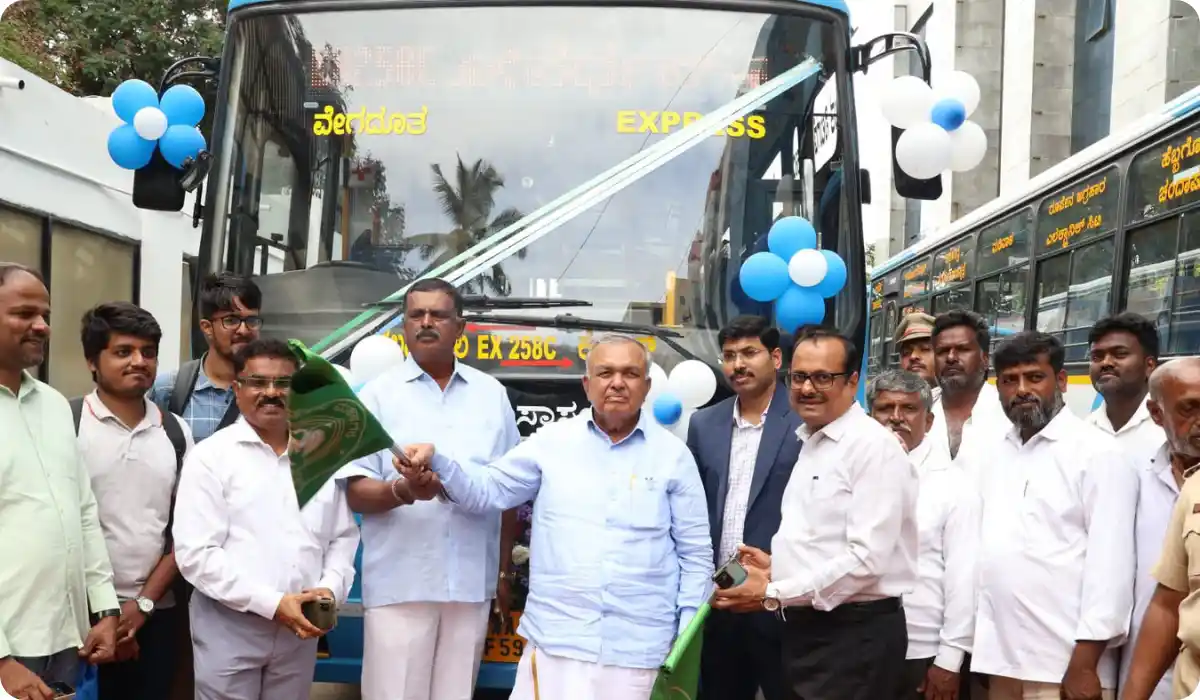
A fresh debate over Bengaluru’s public transport structure has emerged after former Infosys CFO TV Mohandas Pai called for the inclusion of private bus operators in the city’s mobility ecosystem, citing persistent bus shortages and connectivity challenges.
Karnataka Transport Minister Ramalinga Reddy, however, strongly defended the state-run public transport model, asserting that mobility services must prioritise social responsibility over commercial viability.
Pai triggered the discussion through a social media post, alleging that Bengaluru has faced inadequate bus services for several years.
He argued that the Karnataka government should allow private operators to provide urban bus services, emphasising that citizens require reliable and efficient public transport regardless of whether it is operated by government undertakings or private entities.
KSTDC Double Decker Bus in Banglore: Here’s Complete Route, Fare and Booking Details
Pai stated that Bengaluru’s rapid population growth and expanding urban sprawl demand increased fleet strength and improved service reliability to address commuter needs.
The comments sparked widespread public discussion, with several commuters highlighting operational challenges such as unpredictable schedules, slow-moving buses, inadequate route coverage and weak last-mile connectivity.
Some commuters also pointed to limited integration between the Bengaluru Metro Rail network and city bus services, noting that both systems often function independently rather than as a coordinated multimodal transport framework.
Responding to Pai’s remarks, Transport Minister Ramalinga Reddy rejected the proposal for private participation and invited Pai to engage in a direct public debate with the Bengaluru Metropolitan Transport Corporation (BMTC) Managing Director.
Reddy described Pai’s perspective as overly focused on financial metrics, emphasising that the government views public transport as a social service supporting approximately 1.5 crore citizens across Karnataka.
Highlighting government initiatives, Reddy cited the success of the Shakti scheme, which provides free bus travel for women across the state.
According to official data, the programme has facilitated over 650 crore passenger trips, significantly improving access to employment, education and social mobility for women. The minister stated that such welfare-driven mobility initiatives are central to the government’s transport strategy.
Reddy also outlined the operational model of state transport corporations, explaining that nearly 30% of routes operate at a financial loss to maintain rural and remote connectivity, while another 30% operate at break-even levels. Profitable long-distance routes help cross-subsidise essential services.
He noted that Karnataka currently operates 26,054 buses, with BMTC alone managing a fleet of 7,108 buses serving nearly 45 lakh commuters daily. The network covers more than 13 lakh kilometres and conducts approximately 66,000 daily trips, including services operated by 1,686 electric buses.
The minister further stated that over 5,800 new buses have been inducted into Karnataka’s fleet in the past two years, with plans to add another 2,000 buses by March 2026.
Warning against private sector dominance, Reddy argued that profit-driven operators may withdraw services from less viable routes, potentially affecting low-income commuters and rural populations.
The ongoing exchange has reignited policy discussions around balancing public welfare obligations with efficiency and service expansion in urban mobility planning.
Catch the latest Bus Industry updates, Exclusive Interviews, Bus News, and International Bus News on Coach Builders India. Download the latest issue of the The Bus Insider magazine for more insights.