From Onboard Wi-Fi to AI: How AirFi Is Transforming Bus Safety and Fleet Operations

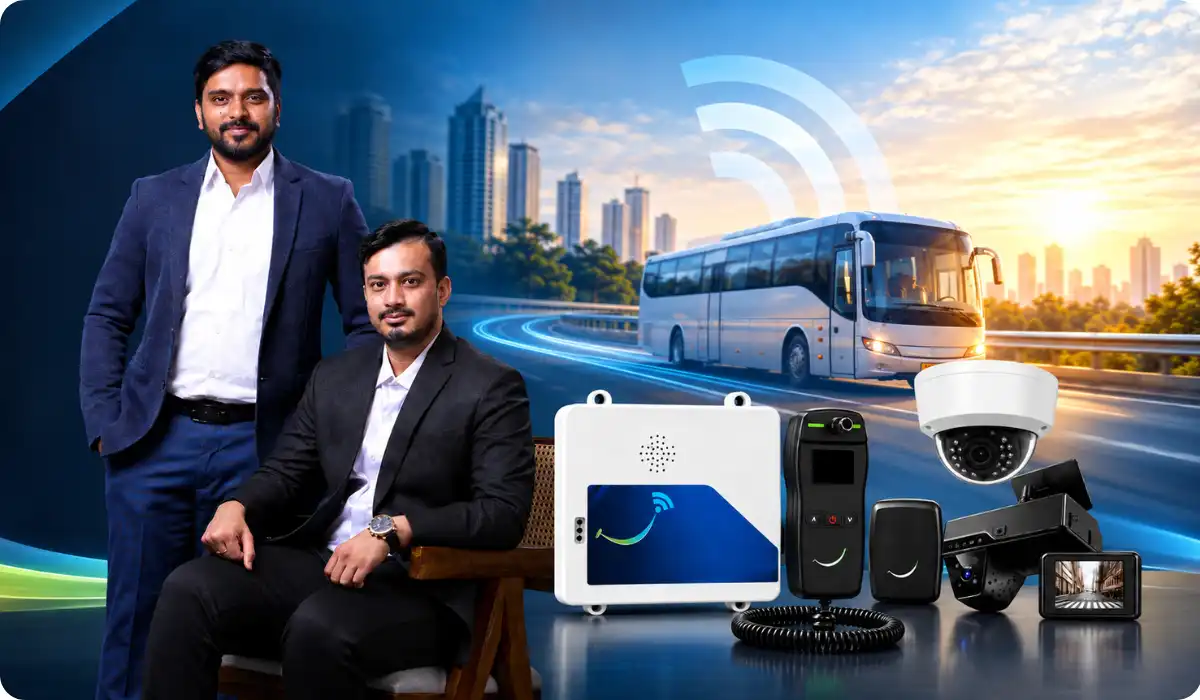
Every successful mobility company begins by solving a real-world problem. For AirFi, that problem wasn’t discovered in a boardroom or research lab; it was experienced firsthand during a bus journey.
In 2016, shortly after graduating from engineering, co-founders Ganga Sathish Reddy and Ranjith Reddy were travelling from Hyderabad to Tirupati when they encountered a reality familiar to millions of Indian bus passengers. Internet connectivity was unreliable, there was no onboard entertainment, passengers received little information about their journey, and even something as basic as identifying the correct boarding or arrival point was often confusing.
The experience sparked a simple yet powerful question: Why should bus travel lag when technology has transformed almost every other mode of transportation?
That question laid the foundation for AirFi.
Today, the company has evolved far beyond its original vision of onboard connectivity. What began as a passenger experience solution has transformed into an AI-powered connected mobility platform, helping bus operators improve safety, operational efficiency, compliance and passenger engagement through a single integrated ecosystem.
Looking Beyond Passenger Wi-Fi
AirFi’s first innovation focused on improving the passenger journey. The company introduced onboard Wi-Fi, offline entertainment and an intelligent passenger announcement system that enabled travellers to stay connected while receiving multilingual journey updates throughout their trip.
However, as the founders began working closely with fleet operators, they realised passenger experience represented only one part of a much larger challenge.
Operators were simultaneously grappling with driver behaviour, fleet visibility, passenger safety, operational efficiency, regulatory compliance and customer retention. Managing these challenges through multiple disconnected technologies created complexity rather than efficiency.
This insight fundamentally changed AirFi’s direction. Instead of continuing to develop standalone products, the company chose to build an integrated mobility ecosystem where safety, passenger experience, compliance and fleet intelligence could operate on a unified platform powered by artificial intelligence, IoT and cloud technology.
One Platform. Multiple Solutions.
Today, AirFi’s portfolio spans nearly every aspect of bus operation.
At the heart of the platform are AI-powered Driver Monitoring Systems (DMS) and Advanced Driver Assistance Systems (ADAS), designed to identify fatigue, distraction, mobile phone usage, smoking, seatbelt violations and other risky driving behaviours in real time. Rather than reacting after an incident occurs, the system provides immediate alerts to help prevent accidents before they happen.
Passenger experience remains another key pillar of the platform. AirFi’s onboard Wi-Fi, offline entertainment and multilingual passenger announcement system ensure travellers remain informed and connected throughout their journey. GPS-triggered announcements provide stop information, emergency exit instructions and rest-stop updates, improving both convenience and safety.
The company has also expanded into operational intelligence through AI-powered passenger counting cameras, helping operators monitor occupancy, reduce revenue leakage and improve fleet utilisation.
Complementing these solutions are AI-enabled alcohol breath analysers, GPS tracking, telematics, AI dash cameras, MDVR systems, CCTV and fuel monitoring technologies, giving operators end-to-end visibility across their fleet.
Unlike many technology providers that offer individual products, AirFi has focused on ensuring every solution communicates through one connected ecosystem, allowing operators to access actionable insights from a single platform.
Safety Moves to Centre Stage
Among AirFi’s offerings, one solution has emerged as the company’s fastest-growing product – the AI-powered Driver Monitoring System.
As bus and commercial fleet operators increasingly prioritise passenger safety, the industry is shifting from reactive monitoring towards preventive safety technologies.
AirFi’s DMS continuously analyses driver behaviour using artificial intelligence, identifying fatigue, distraction, yawning, mobile phone usage, smoking and seatbelt violations before these behaviours escalate into safety risks.
The growing adoption of the platform reflects a broader transformation within India’s commercial vehicle industry, where technology is increasingly being used not only to improve operational efficiency but also to reduce accidents through behavioural monitoring.
Another rapidly growing solution is the AI-enabled Alcohol Breath Analyzer, which digitally verifies driver sobriety before every trip. Together with AI Dash Cameras and CCTV systems, the technology provides fleet operators with greater accountability while strengthening passenger confidence.
On the passenger side, AirFi continues to see strong demand for its onboard connectivity and intelligent announcement systems, particularly among premium bus operators seeking to differentiate themselves through a better travel experience.
Meanwhile, the company’s Passenger Counting Camera has found increasing acceptance among operators looking to address revenue leakage caused by unauthorised roadside boarding while improving occupancy planning and operational transparency.
“The future of bus mobility lies in connected intelligence, where safety, operations and passenger experience work together as one ecosystem, not as isolated technologies.”
Ganga Sathish Reddy, Co-Founder, AirFi
Technology That Adapts to Every Operator
One of AirFi’s defining strengths lies in its ability to customise its platform for different operator requirements.
The company today works with intercity bus operators, school transport providers, staff transportation companies and commercial fleet operators across India.
Rather than deploying identical solutions across every fleet, AirFi tailors its technology stack according to each operator’s operational priorities.
For premium operators such as Shyamoli Paribahan, passenger experience remains the primary focus. The deployment of onboard Wi-Fi, offline entertainment and intelligent passenger announcements has helped improve customer satisfaction while strengthening brand perception and occupancy.
For operators such as Laxmi Holidays, the emphasis has been on safety and operational visibility. Through the deployment of Driver Monitoring Systems, GPS tracking, CCTV and Alcohol Breath Analyzer solutions, the operator has enhanced driver accountability while improving overall fleet safety.
Perhaps the strongest endorsement of AirFi’s platform is the way customers adopt it. Many operators begin with a limited deployment before gradually expanding the technology across hundreds of vehicles after witnessing measurable improvements in safety, operational efficiency and passenger satisfaction.
“The real value of AI in mobility is enabling operators to prevent risks, make smarter decisions and deliver a better journey for every passenger.”
Ranjith Reddy, Co-Founder, AirFi
Building the Connected Bus Ecosystem
For AirFi, the journey has evolved well beyond onboard connectivity.
The company is steadily positioning itself as a technology partner for bus operators by bringing together artificial intelligence, IoT, cloud software and intelligent hardware into one connected platform.
As India’s bus industry accelerates its digital transformation, the demand for integrated bus technology is expected to grow further. Operators are increasingly looking for solutions that not only improve passenger safety and operational efficiency but also simplify fleet management through unified data and real-time intelligence.
Rather than developing isolated products, AirFi’s long-term direction remains centred on expanding its connected ecosystem – one where Driver Monitoring Systems, ADAS, telematics, passenger information, compliance and analytics work together to support smarter decision-making.
The company’s vision reflects a broader shift taking place across the industry. Connected mobility is no longer just about internet access or onboard entertainment. It is becoming an important part of modern fleet operations, enabling operators to improve safety, optimise performance and deliver a better passenger experience. For AirFi, the mission remains unchanged from that bus journey in 2016: to make every journey safer, smarter and more connected.
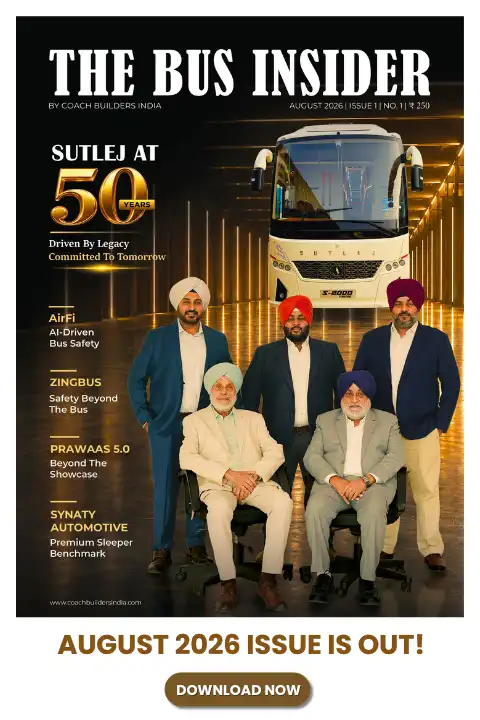
Catch the latest Bus Industry updates, Exclusive Interviews, Bus News, and International Bus News on Coach Builders India. Download the latest issue of the The Bus Insider magazine for more insights.