Aggregators Can Transform Intercity Bus Safety Standards, Says IntrCity SmartBus’ Dinesh Rathi

Dinesh Rathi, SR. VP, IntrCity SmartBus, highlights how bus aggregators can transform intercity travel safety by creating a standardised, accountable, and technology-enabled service layer connecting operators, regulators, and passengers.
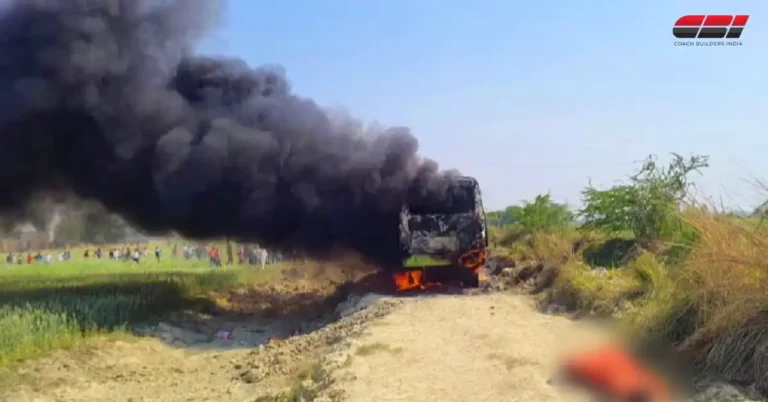
In the past few months, India has witnessed a series of tragic intercity bus accidents, some fire incidents, and some deadly crashes, which has brought passenger safety into the spotlight.
Public concern has been palpable, policymakers have issued statements, emergency meetings between stakeholders have been held, and new standards have been thrown in. All for good.
Media outlets have questioned whether the industry stakeholders are doing enough to prevent such incidents. In this moment of heightened scrutiny, many commentators have focused on vehicle design standards, regulatory gaps, and the role of fleet owners, a.k.a bus operators. However, I think that one critical player in the ecosystem remains under-recognized – the aggregator or platforms.
IntrCity Launches SmartBus.AQI: India’s First Fleet of Air-Purified Intercity Buses
Learning from Other Industries: Platforms as Compliance Bridges
The Zomato Playbook
A decade ago, India’s restaurant landscape was largely unorganized. Customers rarely knew whether a restaurant was FSSAI-compliant or was following basic hygiene norms. When platforms like Zomato and Swiggy scaled, they didn’t just organize delivery — they became compliance bridges between the FSSAI, state food safety departments, and restaurants.
Platforms nudged restaurants to secure licenses, maintain hygiene ratings, train staff, and follow food handling protocols. Over time, the food industry became more transparent, more accountable, and significantly safer for consumers.
How Ola & Uber Made Taxis Safer
Convenience is not really the only or first thing that app-based taxi aggregators got to us. Indian taxi services had minimal standardization. There was no uniform mechanism to ensure functioning GPS, panic buttons, documentation checks, or customer grievance channels.
Ola and Uber changed that by digitising driver verification, enabling GPS tracking, mandating panic buttons, and creating a safety-monitoring backend. They became the operational interface between taxi drivers, transport departments and the public, resulting in far greater safety, visibility and enforcement.
Urban Company and the Formalization of Home Services
Urban Company took a deeply fragmented house-help and handyman market and introduced structured onboarding, background verification, training, and behavioural protocols.
Today, it is one of India’s strongest examples of how a platform can raise service standards by sitting ‘between’ providers and regulators.
This Bus Operator from Assam Turned the Worst Seats into the Hottest Tickets
The Intercity Bus Industry: A Complex, Multi-Stakeholder Ecosystem
The intercity bus sector is far more complex than restaurants, taxis or home services. Let’s take a look:
- Vehicles (Chassis) are manufactured by OEMs and are responsible for engineering, structural design and technology.
- Bus bodies are built by coach builders. They are very critical to safety as they look after structural integrity, roll-over testing, interiors, safety installations, and electrical installations.
- Routes are licensed through state RTOs with different documentation requirements, enforcement capabilities.
- Safety certifications and type approvals come from ARAI, CIRT and other national testing bodies.
- Passengers depend on ticketing aggregators to book and travel
- Registration, state taxes, and interstate permits are defined by individual states, creating a non-uniform cost structure and compliance requirements.
- MoRTH and NHAI define toll taxes and set national highway safety, operational guidelines and infrastructure.
- Fleet owners / Operators are responsible for day-to-day operations, scheduling, vehicle maintenance, driver training,
This fragmentation means no single entity currently oversees passenger safety end-to-end. OEMs focus on vehicle engineering; coach builders focus on fabrication; regulators focus on certifications; fleet owners focus on business economics. Passengers rarely know who is accountable.
This is where aggregators like IntrCity SmartBus play a crucial role and why they are indispensable for the next phase of India’s mobility evolution. Ticketing aggregators and service layer platforms are the most visible touch points for the passengers through which they book, track, board and experience the journey.
All India Tourist Permit: From Vision to reality, Boon to Bane 2021-2025
How Service Layer platforms like IntrCity Strengthen Safety and Accountability
1. Creating a Standardized Service Layer
IntrCity has built operational SOPs across:
- Vehicle inspection
- Maintenance schedules
- Driver protocols
- Onboard hygiene
- Safety equipment audits
- Emergency communication systems.
Unlike standalone bus operators, an aggregator can enforce these standards across hundreds of vehicles, creating consistency that the unorganized industry has historically lacked.
2. Real-Time Communication Between Stakeholders
When a vehicle breaks down for any reason, the first point of alert is often the IntrCity (aggregator’s) control room. IntrCity’s backend can:
- Flag repeated defects to OEMs
- Notify coach builders of structural issues
- Communicate safety deviations to RTOs
- Share passenger grievance data with policymakers
IntrCity, for instance, has already been participating in cross-industry discussions advocating uniform body-building standards and stringent compliance monitoring. This feedback layer is essential because regulators often lack real-time data, while OEMs and builders are far removed from day-to-day operations.
3. Raising the Baseline for Safety Infrastructure
Platforms can institutionalize safety across the fleet by mandating:
- CCTV cameras
- Fire detection and suppression systems (FDSS)
- GPS-based monitoring
- Emergency exits
- First-aid equipment
- Onboard washrooms
- Driver Monitoring and Alert System (DMAS) and Advanced Driver Assistance System (ADAS)
More importantly, aggregators can audit and verify these requirements continuously — something no government department can realistically do for tons of buses.
4. Centralized Driver Training and Behaviour Monitoring
Driver behaviour plays a major role in preventing fire incidents and road accidents. Aggregators allow:
- Standardized training modules
- Rest-hour enforcement
- Alcohol testing
- Speed-governor monitoring
- Reward systems for safe driving.
With telematics, aggregators can analyze patterns (idling, harsh braking, risky overtakes) and intervene quickly.
5. Acting as a Transparent Interface for Passengers
Passengers don’t know OEMs or coach builders, but they do know the aggregator they book through.
This visibility allows platforms to:
- Issue safety advisories
- Publish compliance scores
- Run awareness campaigns
- Notify passengers of emergency SOPs.
That public communication layer is a crucial part of building trust.
Manoj Soni’s Vision to Transform YoloBus into a Smart, Sustainable Mobility Leader
Why Policymakers Should Collaborate More Closely with Aggregators
.webp "Aggregators Can Transform Intercity Bus Safety Standards, Says IntrCity SmartBus' Dinesh Rathi")
Government bodies like ARAI, MoRTH, SIAM, state RTOs and fire departments often work in silos. Aggregators, however, sit in the operational middle — handling real-world data, real-world passenger behaviour, and real-world vehicle conditions.
If India is to prevent the next big tragedy, policymakers must leverage aggregators as:
- Data partners (real-time defect reporting)
- Compliance partners (on-ground checks)
- Communication partners (public safety messaging)
- Standardization partners (developing unified protocols)
- Industry feedback collectors (what fleet operators and passengers are experiencing)
Just like Zomato became a channel for food safety enforcement and Ola/Uber for taxi regulations, bus aggregators can be the single strongest enforcers of safety in a sector that desperately needs uniformity.
AIS 153 Explained: Here’s What Bus Body Builders Need to Know and Do
The Future of Bus Travel Is a Managed Service-Layer Model
India’s intercity bus sector cannot rely on fragmented accountability any longer. Fire accidents are not merely engineering failures; they are systemic failures that occur when communication breaks down between builders, regulators and operators.
The solution is not just better-built buses but better-connected ecosystems — where data flows freely, standards are consistently enforced, and customers know exactly who is responsible.
Aggregators like IntrCity SmartBus bring structure to this complexity. They operate as the safety nerve-centre of an otherwise decentralized industry. They are the eyes and ears of policymakers on the ground. And they are the trust bridge that can finally bring OEMs, coach builders, fleet owners and regulators onto the same page.
If India wants safer highways, fewer tragedies and a more dignified intercity travel experience, the country must strengthen, not sideline, the role of aggregators. They are no longer booking platforms. They are the infrastructure that makes safety possible.
This opinion piece was originally published in the November 2025 issue of our monthly magazine, The Bus Insider.
Catch the latest Bus Industry updates, Exclusive Interviews, Bus News, and International Bus News on Coach Builders India. Download the latest issue of the The Bus Insider magazine for more insights.