Bus Safety Requires Collaborative Ecosystem Approach, Says MG Group’s Sivakumar V

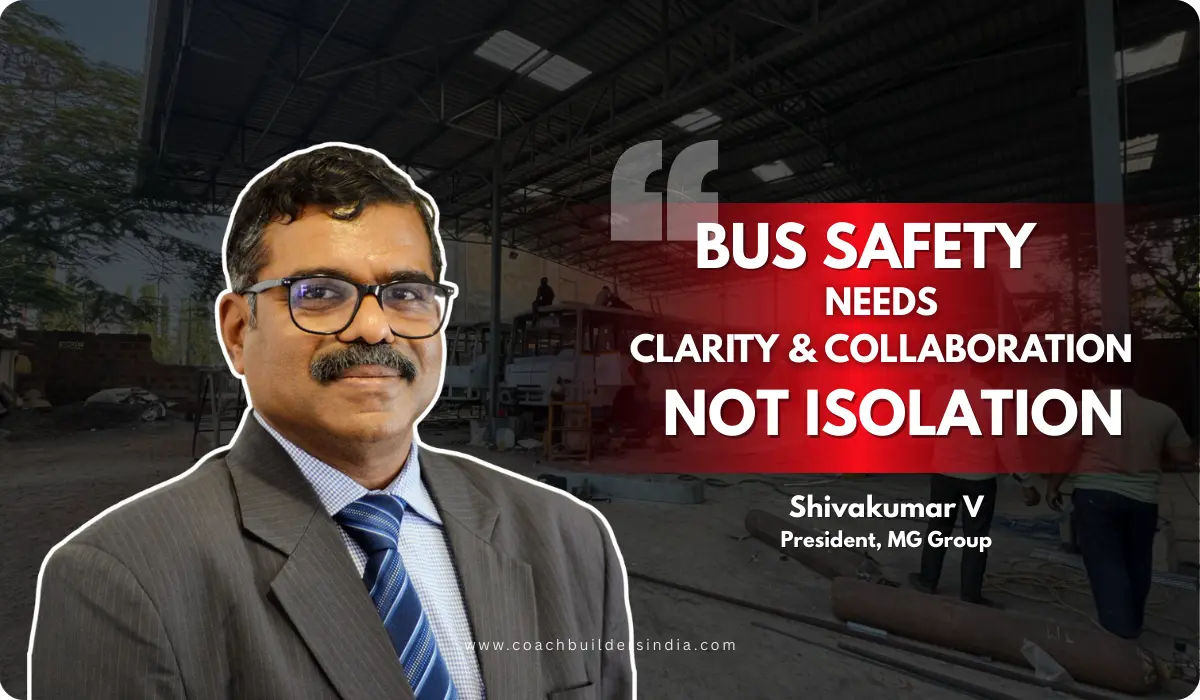
In an exclusive interview, Sivakumar V, Group President, MG Group, discusses how India can raise bus safety standards without disrupting the MSME-driven bus body building ecosystem.
India’s bus safety debate has entered a decisive phase. After a spate of fatal fires and years of uneven enforcement, the government has moved to tighten how buses are built, certified, and allowed on the road. The objective is clear. Safer buses are non-negotiable.
But the bus ecosystem is more than vehicles and regulations. It is also a significant employment engine. Thousands of skilled fabricators, technicians, and workers, many operating in semi-urban and rural clusters, depend on bus body building for their livelihoods. For decades, this decentralised network has supported affordable mobility while sustaining local manufacturing and skilled jobs.
The challenge now lies in alignment. Raising safety standards without destabilising viable businesses. Enforcing compliance without excluding experience and capability. And ensuring that reform strengthens, rather than fragments, India’s bus manufacturing base.
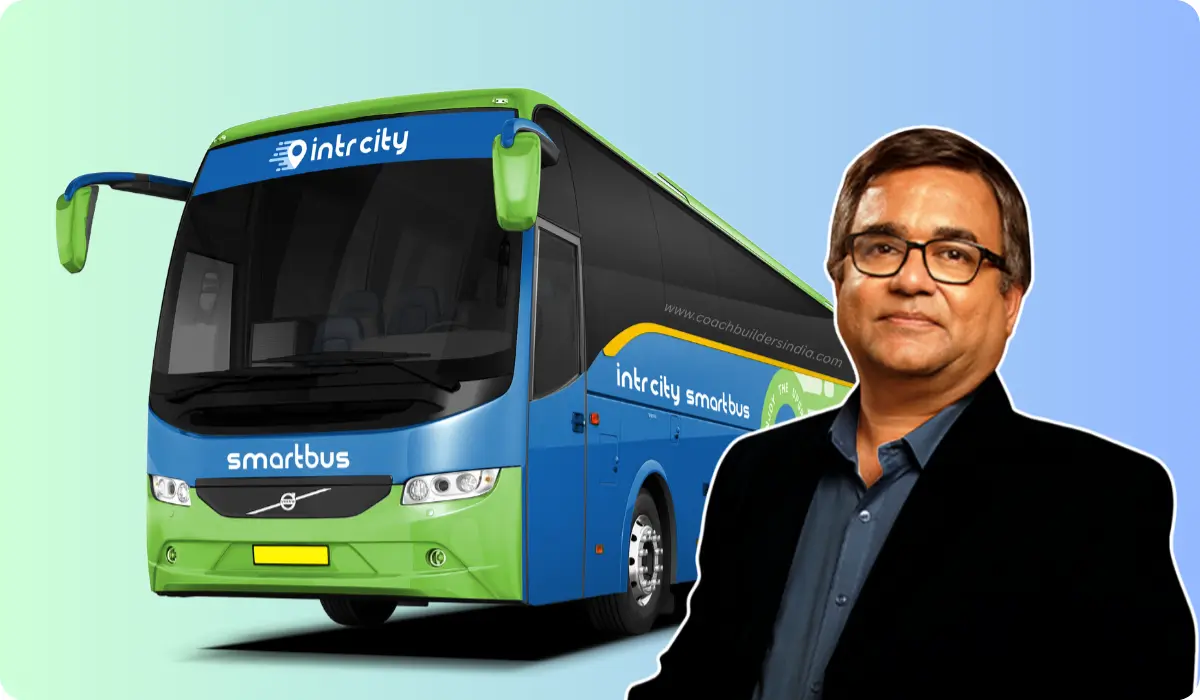
In this exclusive interview, Sivakumar V, President, Strategy & Sales at MG Group, highlights how the new sleeper bus body norms can be implemented in a way that strengthens safety, compliance, and industry sustainability together.
Recent bus fire incidents have increasingly been linked to bus body building practices. How do you view this narrative? In your opinion, are there other contributing factors that need equal attention?
Recent bus fire incidents are deeply concerning, and passenger safety must remain the industry’s highest priority. However, attributing these incidents solely to bus body building practices would be an oversimplification.
A bus is a complex, integrated system comprising the chassis, powertrain, fuel system, electrical architecture, exhaust and after-treatment systems, HVAC, interior materials, wiring and fuel line routing, and real-world operating conditions.
Fires can originate from multiple points across these systems, involving any of the components mentioned. Maintenance practices also play a critical role and cannot be overlooked.
While I firmly believe the industry must comply with all regulatory requirements laid down by the government, and that body building quality and material selection are important, focusing on only one link in the value chain risks missing the real root causes.
What is needed is a systems-level perspective and a collaborative approach across stakeholders.
So you believe there is a need for a comprehensive, independent technical investigation into bus fire incidents, rather than isolated corrective actions. What should such an investigation cover to arrive at meaningful solutions?
Yes, there is a strong need for a comprehensive, independent, and technically robust investigation into bus fire incidents, rather than isolated or reactive corrective measures.
Such an investigation should examine body–chassis integration practices, compliance with bus body code specifications, chassis and engine design, including BS6 after-treatment systems, thermal management and heat dissipation, electrical architecture and wiring protection, material flammability and interior layouts, operating conditions, duty cycles, maintenance practices, and driver awareness, along with early-warning systems.
Only a holistic investigation can lead to evidence-based standards and prevent knee-jerk actions that fail to address the underlying causes of these incidents.
MD Yash Sharma Reflects on The Damodar Story of Legacy, Design, and Reinvention
Several operators and bus body builders have observed that a significant number of reported fire incidents involve BS6 buses, though this has not received adequate public attention. How do you view this trend, and does BS6 technology call for a different approach to safety and system integration?
It is a fact that a large proportion of reported fire incidents involve BS6 vehicles, though this has not been adequately analysed or discussed in the public domain. BS6 technology introduces the following challenges:
- Higher exhaust temperatures
- DPF regeneration cycles
- More complex electrical and electronic systems
- Tighter packaging constraints
These factors demand a higher level of integration, validation, and operating discipline. As a result, BS6 buses require:
- Enhanced thermal shielding
- Rerouted wiring and fuel lines
- Improved heat management strategies
- Better driver training on regeneration behaviour
So yes, BS6 buses require a fundamentally different approach to safety and integration, and the industry is still in a learning and stabilisation phase. CV OEMs and bus and coach builders must work collectively to improve practices.
Hon’ble Minister Nitin Gadkari recently announced that bus body building will be restricted to OEMs and certified players. How do you interpret this, and what would be the right way to implement such measures without adversely impacting India’s largely MSME-driven bus body building ecosystem?
The intent behind the Hon’ble Minister’s statement is understandable, as it aims to improve safety and accountability. However, the manner of implementation is critical. India’s bus body building ecosystem is largely MSME-driven, employing thousands of people and catering to diverse regional requirements.
A sudden or unclear restriction could:
- Disrupt livelihoods
- Reduce capacity and innovation
- Increase costs for operators
- Create supply bottlenecks
Rather than exclusion, my view is that the focus should be on graduated certification, capability building, and transparent compliance pathways. Safety outcomes are best improved by uplifting the ecosystem, not by shrinking it.
The bus body building fraternity should work closely with the Ministry to meet, surpass, and excel in delivering best-in-class safety compliance, which alone will help instill confidence with the Hon’ble Minister.
Many mid-scale and small bus body builders say they are willing to comply with government-prescribed safety norms but lack clarity around specifications and compliance processes. In your view, how critical is this gap in clarity, and what practical steps can be taken to address it effectively?
This is a very real and valid concern. While the regulations themselves are adequately defined, we have received strong support from testing agencies whenever clarifications or technical guidance have been sought.
Most bus body builders are willing to comply with safety norms, but they often struggle with:
- Fragmented guidelines
- Interpretation gaps
- Lack of technical handholding
- Limited access to testing and validation facilities
Addressing this gap is critical. It can be bridged through:
- Clear, consolidated compliance manuals
- Standardised design templates
- Industry workshops and training programmes
- OEM–body builder technical collaboration
- Digital compliance toolkits
Bus body builders should come together under a common umbrella to cross-pollinate the expertise and knowledge available among pioneers and leaders in this domain. Clarity reduces non-compliance far more effectively than penalties.
.webp "Bus Safety Requires Collaborative Ecosystem Approach, Says MG Group’s Sivakumar V")
The upfront cost of type approval is difficult to manage, especially for small and mid-scale players. While safety cannot be compromised, what measures could the government consider to ease compliance without diluting regulatory intent?
The cost of type approval is indeed a challenge, particularly for small and mid-scale players. However, there cannot be any compromise on safety on account of these costs. The government should advise test agencies to evaluate feasible options for optimising testing costs.
The industry should represent to the government to consider:
- Phased implementation timelines
- Subsidies or reimbursement schemes
- Shared testing and design infrastructure
- Cluster-based accreditation
- Technical support cells linked to ARAI, ICAT, and CIRT
- Feasible reduction in test fees
Such measures would encourage compliance without forcing capable players out of the system.
2025 Year-Ender: The Highs, Lows, and Turning Points of India’s Bus Industry
Do you believe the bus body building industry needs to collectively represent itself to reassure the government of its commitment to safety, quality, and regulatory compliance? If so, how can such collective representation be structured and made effective?
Absolutely! The industry must speak in one responsible and unified voice. As stated earlier, there is an immediate need for bus body builders to come together collectively, much like SIAM represents automotive manufacturers in the country.
A credible collective platform can:
- Represent facts rather than emotions
- Engage constructively with policymakers
- Share best practices
- Commit to measurable safety outcomes
This can be achieved through:
- Strengthened industry associations
- Joint OEM–body builder councils
- Technical working groups involving regulators
Collective responsibility builds trust far faster than fragmented lobbying. It also reassures the government of the industry’s intent to prioritise passenger safety and adhere to prescribed compliance requirements.
If you could convey one clear message to policymakers today, what would it be to ensure that bus safety improves, accountability is implemented effectively, and the Indian bus body building industry continues to grow sustainably?
Safety will improve not by isolating a single stakeholder, but by strengthening the entire ecosystem through scientific investigation, clear regulations, phased compliance, and collaborative accountability. Support the industry to comply, and it will deliver safer buses for India.
Despite several challenges, the bus body building industry has consistently contributed to citizens’ mobility needs and to the nation’s economic growth.
India needs safe buses, sustainable businesses, and skilled employment generating jobs for the rural populace, and all three objectives are achievable together.
Catch the latest Bus Industry updates, Exclusive Interviews, Bus News, and International Bus News on Coach Builders India. Download the latest issue of the The Bus Insider magazine for more insights.