2025 Year-Ender: The Highs, Lows, and Turning Points of India’s Bus Industry

From record-breaking demand and festive surges to safety crises and policy friction, a look back at the moments that shaped India’s bus industry in 2025.
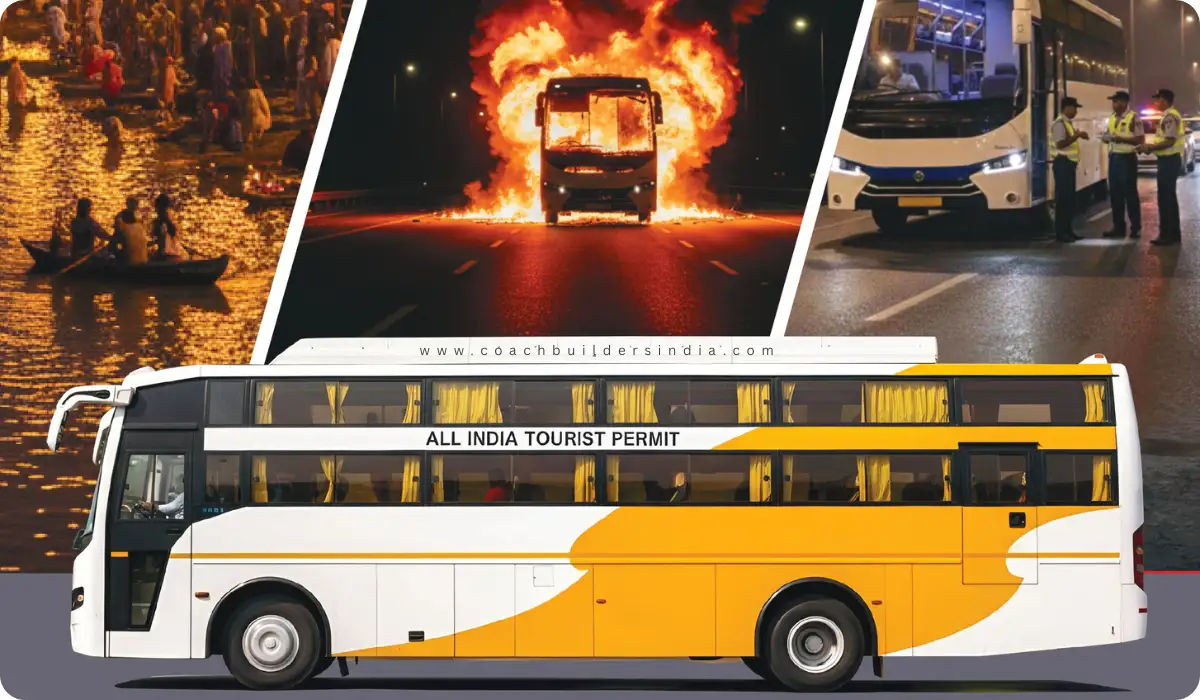
2025 was not a year the Indian bus industry could afford to treat lightly. It was a year of scale and stress, of growth and reckoning, where moments of operational triumph sat alongside hard questions on safety, enforcement, and policy alignment.
Demand surged, scrutiny intensified, and long-standing fault lines finally surfaced. Taken together, the year became a mirror, reflecting both how far the industry has come and how much work still lies ahead.
Mahakumbh 2025: Demand at an Unprecedented Scale
The year kicked off on a fiercely positive note for the Indian bus industry, fuelled by the Mahakumbh in Prayagraj. While the event is spiritual at its core, for mobility players it proved to be an economic and operational blockbuster, setting the tone for everything that followed.
The scale of movement was unprecedented. Millions travelled across states, cities, and districts within a compressed time window. While trains and flights played their part, it was buses that emerged as the most flexible and responsive mode of transport, absorbing demand that shifted daily and often unpredictably.
According to Sciative Solutions’ analysis, bus transport supply surged by 378% from pre-Kumbh levels as the event gathered momentum. Operators ramped up services rapidly, adding capacity well ahead of peak bathing days to avoid bottlenecks.
The demand story was even more striking. As per redBus, bus seat demand for Prayagraj witnessed a staggering 3,600% (36x) increase compared to a normal period.
Bus travel between Delhi and Prayagraj alone spiked by 648% during January.
To meet this surge, operators and platforms expanded their networks aggressively. The number of unique bus routes servicing the Mahakumbh region increased from 322 routes to 1,611 routes by January 2025, reflecting the industry’s ability to scale rapidly under pressure.
Bus deployment peaked around February 10, after which capacity was gradually rationalised as demand stabilised. Even then, services were reduced to only 34.9% below peak levels, indicating sustained travel activity well beyond the event’s busiest days.
What Mahakumbh highlighted was not just demand, but adaptability. Buses absorbed pressure in a way few other modes could.
Aluminium Flat Rolled Products: A Smart Material Choice for Modern Bus Bodies
Spring and Summer: When Data Started Telling the Story
As the calendar moved into spring and summer, travel patterns began to stabilise, but volumes remained firmly elevated. This phase marked a shift from event-led surges to sustained, data-driven demand, offering deeper insight into how passenger behaviour was evolving.
According to the latest India Bus Track Report by redBus, intercity bus travel recorded a 25% year-on-year growth in passenger volumes during H1 FY26, with travel between April and September accounting for a significant share of annual intercity movement. Growth was driven by expanding route networks, rising digital ticketing adoption, and a growing preference for premium travel options.
Comfort-led choices continued to dominate the market. Sleeper and hybrid buses accounted for 85% of all journeys, while AC buses represented 71% of total seats sold, reinforcing the industry’s gradual shift away from basic point-to-point transport toward experience-led mobility.
Long-haul travel also gained momentum, with nearly 65% of active routes exceeding 250 kilometres, signalling a clear move from short, regional trips to longer inter-state journeys where buses increasingly compete with rail on convenience and flexibility.
Geographically, demand growth was no longer metro-centric. redBus data showed that 61% of bookings originated from non-metro cities and towns, while India’s top six metros contributed 33%, and other state capitals accounted for the remaining 6%. The numbers highlighted deeper digital penetration and a broadening mobility appetite beyond traditional urban centres.
By mid-year, one thing was evident. The bus industry was no longer just responding to spikes in demand. It was navigating a structurally larger, more distributed, and increasingly expectation-driven market.
Diwali: The Festive Surge
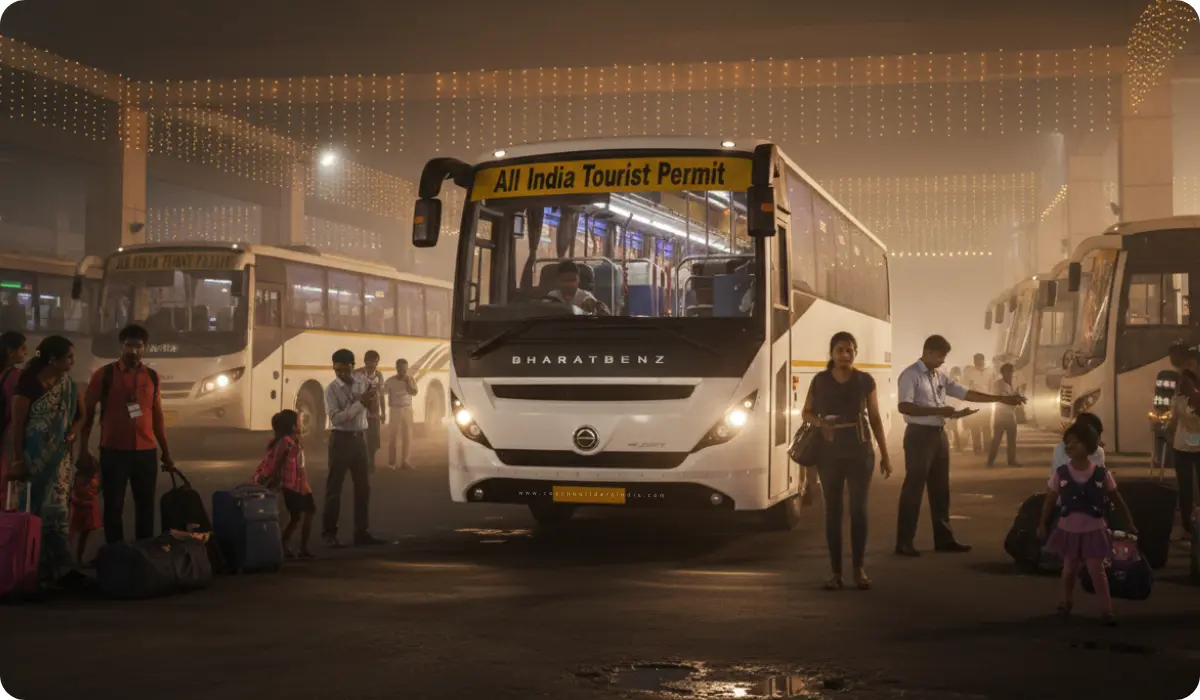
By the time Diwali arrived, demand surged once again.
The festival remains one of the most important travel periods for the bus industry, and 2025 was no exception. Advance bookings opened early, high-density routes sold out days in advance, and sleeper buses ran at near-full occupancy, driven by overnight travel preferences and time-bound holiday travel.
According to the Sciative Solutions Festive Mobility Report published in October, private operators recorded a 45% year-on-year increase in bookings during the festive window.
The spike was most visible on long-haul intercity corridors. Advance booking data from October 17–19, 2025, showed demand on Delhi–Varanasi up 51%, Mumbai–Indore up 46%, and Bangalore–Visakhapatnam up 43% compared to Diwali 2024.
To meet this surge, operators expanded capacity aggressively. IntrCity SmartBus reported a 70% increase in seat capacity across its network during the festive period.
Diwali once again underlined the bus industry’s role as India’s most flexible mobility backbone, able to scale fast, cover long distances, and absorb peak demand with speed and reach.
Diwali Special: How Bus Operators Gear Up for India’s Festive Rush
When the Spotlight Turned Harsh: Fires and Safety Under Scrutiny
The final quarter of the year brought the industry face-to-face with its most difficult chapter.
A series of bus fires made national headlines. From the Jaisalmer and Kurnool to the recent inferno in Chitradurga, the headlines were grim. What had been a year of growth and demand was quickly overtaken by questions of safety and accountability.
The numbers were sobering. The government informed the Rajya Sabha that 64 lives were lost in 45 major bus fire incidents between January 1, 2021, and December 10, 2025. These were not isolated accidents. They pointed to a systemic problem.
Experts flagged a familiar mix of risks: buses built or modified at non-compliant local garages, unsafe aftermarket electrical changes, flammable materials, and weak enforcement that allowed such vehicles to stay on the road.
Authorities responded with tighter inspections and action against non-compliant buses and body builders. At the policy level, the government intensified the push for the AIS 153 bus body code that was made mandatory from September 2025.
The message was clear. Safety could no longer be optional. While the fires were tragic, they also marked a turning point—forcing the industry to confront long-standing gaps and bringing safety firmly to the centre of the conversation.
Bus Fires in India: Are Bus Operators Solely Responsible?
Policy Friction: The Southern AITP Permit Dispute
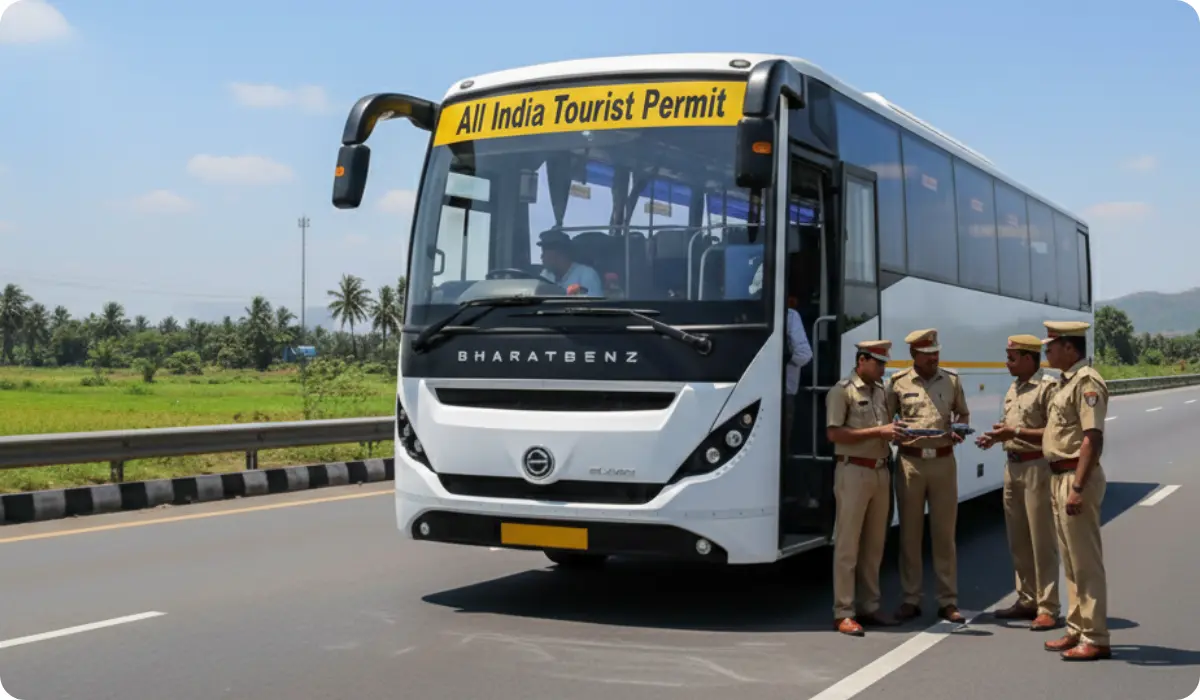
As 2025 drew to a close, a legal and operational storm was quietly building in South India. The All India Tourist Permit (AITP) system meant to enable seamless interstate operations, ran into its toughest test.
In Tamil Nadu, transport authorities began enforcing an additional state-level entry tax on AITP buses registered outside the state. This was despite AITP’s mandate under the Central Motor Vehicles Act to exempt such vehicles from additional state taxes.
Enforcement soon spilled onto the roads and buses were detained at borders. Kerala and Karnataka responded soon after with retaliatory taxes.
By November 11, 2025, operators across Tamil Nadu, Kerala, and Karnataka suspended interstate services. Nearly 1,500 private buses went off the road, stranding an estimated 45,000 passengers daily, just as the Sabarimala pilgrimage season began. In under two weeks, the industry reportedly lost Rs. 36 crore.
While the strike was called off by the end of November following temporary arrangements, many operators cautioned that the relief may be short-lived. Several flagged that the issue could resurface once quarterly tax cycles expire in January, leaving continued uncertainty over how AITP rules will be enforced on the ground.
All India Tourist Permit: From Vision to Reality, Boon to Bane 2021-2025
What Comes Next: Aligning Growth, Safety, and Policy
As the industry steps into 2026, the lessons of the past year are hard to ignore. 2025 proved that India’s bus ecosystem can scale at speed, absorb unprecedented demand, and remain the backbone of intercity mobility when the country needs it most.
But it also exposed the cost of weak enforcement, fragmented accountability, and misaligned policy.
Growth alone is no longer the benchmark. Safety, compliance, and regulatory clarity will define the next phase of the industry’s evolution.
Buses will continue to move India. The question heading into 2026 is whether the ecosystem can move in sync, aligning growth with safety, enforcement with intent, and policy with reality.
Catch the latest Bus Industry updates, Exclusive Interviews, Bus News, and International Bus News on Coach Builders India. Download the latest issue of the The Bus Insider magazine for more insights.