Driver Behaviour and Fatigue: The Leading Causes of Bus Accidents in India

Driver behaviour and fatigue remain the leading causes of bus accidents in India, despite advancements in vehicle safety and infrastructure. This analysis explores why human factors continue to dominate road accident trends.
Key Statistics: Bus Accidents and Driver Behaviour in India
- Driver-related errors contribute to nearly 80% of road accidents in India
- Overspeeding accounts for over 68% of total road accident deaths
- Driver fatigue and drowsy driving remain major but underreported risks
- Over 54% of accidents on the Agra–Lucknow Expressway are linked to drivers falling asleep
- India faces a shortage of over 2.2 million skilled drivers, impacting overall road safety
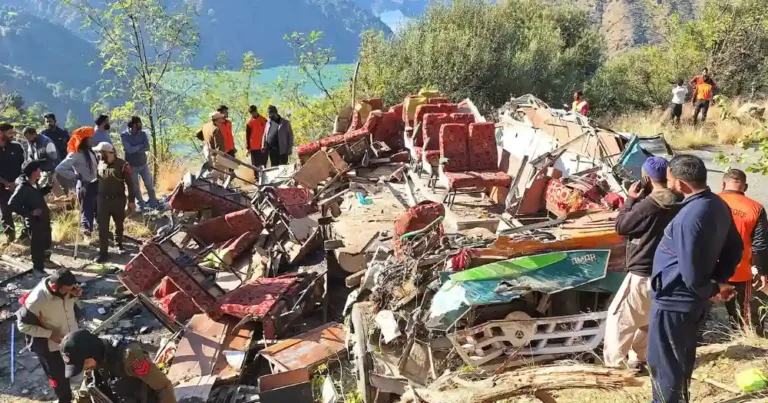
India’s road transport sector witnessed one of its most alarming weeks in recent times. In the last week of March 2026, nearly 50 lives were lost in multiple bus accidents in India, highlighting persistent concerns around road safety.
Despite advancements in vehicle technology and infrastructure, the underlying causes of these accidents remain deeply rooted. The data points to a consistent pattern – driver behaviour.
According to the official Road Accidents in India 2023 Report published by the Ministry of Road Transport and Highways (MoRTH), India recorded over 4.8 lakh road accidents and more than 1.72 lakh fatalities in 2023. Notably, driver error accounts for nearly 80% of road accidents in India, making human behaviour the single largest contributor to road safety risks.
In the context of bus driver safety, these risks are further amplified. Long driving hours, tight schedules, and operational pressures make driver fatigue in India a critical but often underreported factor behind bus accidents.
This raises a fundamental question for the industry:
Are bus accidents in India truly a failure of machines and infrastructure – or a reflection of the conditions under which drivers operate?
Overspeeding: The Leading Cause of Bus Accidents in India
Overspeeding remains the single largest contributor to road accidents in India and continues to be a dominant factor in bus accidents across the country.
MoRTH’s Road Accidents in India 2023 Report further highlights that overspeeding accounted for over 68% of total road accident deaths in 2023, making it the most significant cause of fatalities on Indian roads.
In the context of bus driver behaviour, the risks associated with overspeeding are even more pronounced. Commercial bus operations often involve long-distance routes, tight turnaround schedules, and competitive pressures among operators.
These conditions frequently push drivers to exceed safe speed limits. And the consequences are severe.
At higher speeds, drivers have reduced reaction time, limited control over the vehicle, and a significantly increased likelihood of fatal crashes. This is particularly dangerous for long-distance buses and sleeper bus operations, where high-speed highway driving is common.
Overspeeding, therefore, is not just a driving error; it reflects a system where operational pressures often prioritise speed over safety.
Are BS6 Buses More Fire-Prone? Causes, Expert Insights, and Safety Analysis
Driver Fatigue: The Hidden Cause of Bus Accidents in India
While overspeeding remains the most visible risk, driver fatigue is one of the most dangerous and underreported causes of bus accidents in India.
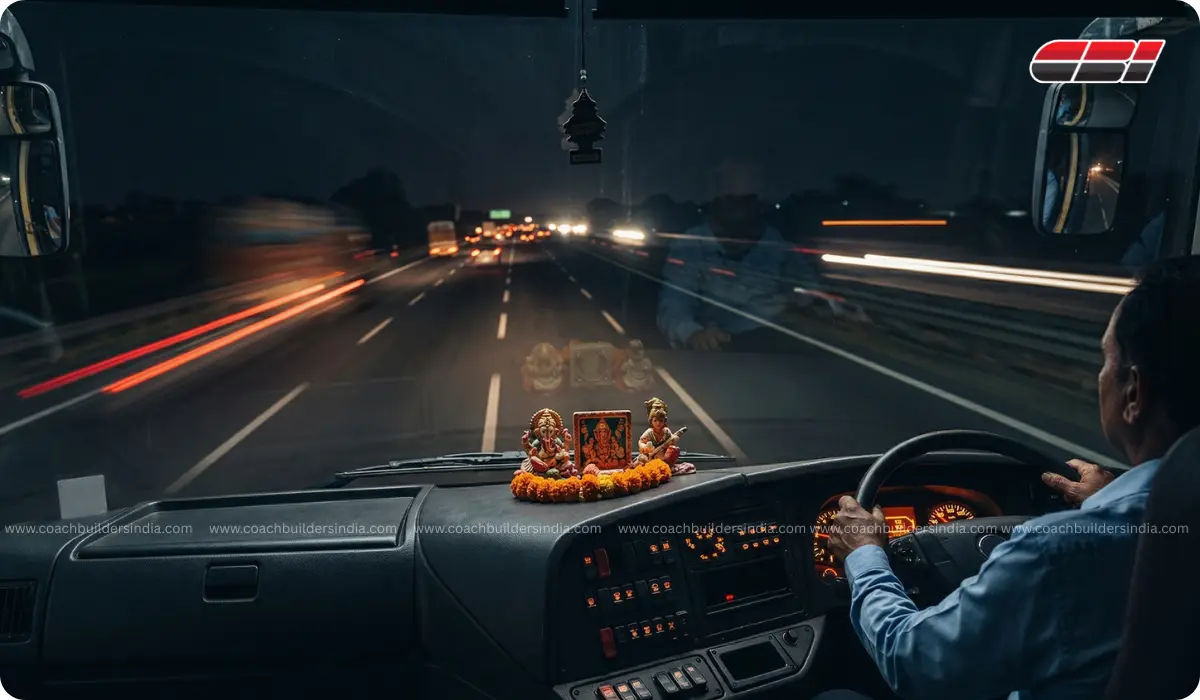
Long-distance routes, night operations, and irregular rest cycles significantly impact bus driver alertness, increasing the likelihood of fatigue-related accidents. In many cases, drivers operate under conditions that do not allow adequate recovery time, leading to reduced concentration and slower reaction speeds.
The risks are particularly severe on high-speed corridors. According to UPEIDA (Uttar Pradesh Expressways Industrial Development Authority) data, over 54% of accidents on the Agra–Lucknow Expressway were attributed to drivers falling asleep at the wheel, highlighting the direct impact of drowsy driving and driver fatigue on road safety.
Despite its significance, fatigue-related accidents in India are often underreported or not systematically captured in national data. This creates a critical gap in both policy-making and accident analysis.
Fatigue is not just a personal issue; it is a structural problem shaped by long working hours, lack of rest infrastructure, and operational demands.
Skill Gaps and Training Deficiencies in Bus Drivers
Beyond fatigue and overspeeding, skill gaps among drivers remain a significant contributor to bus accidents in India.
India is currently facing a shortage of over 2.2 million skilled drivers, as highlighted by Union Minister for Road Transport and Highways, Nitin Gadkari. This shortage reflects a deeper issue within the transport ecosystem, particularly around driver training and workforce readiness.
MoRTH’s Road Accidents in India 2023 Report underlines that human error, including poor judgment, unsafe overtaking, and non-compliance with traffic rules, remains the leading cause of road accidents in India, accounting for nearly 80% of all crashes in 2023.
A large number of drivers enter the industry without formal training in defensive driving, hazard perception, and safe driving practices. In high-risk environments such as long-distance and commercial bus operations, this lack of training can lead to critical errors, including unsafe overtaking, poor judgment, and delayed reactions.
The issue is further compounded by the absence of standardized training frameworks and certification systems, which limit the industry’s ability to ensure consistent driving quality across operators.
Addressing skill gaps is not just an operational necessity – it is a key step toward reducing accidents and improving overall road safety outcomes in India.
AIS 153 Raising the Bar for India’s Bus Manufacturing Ecosystem Says INALCO’s Mohit Garg
Driver Distraction and Inattention: An Emerging Risk Factor
Alongside fatigue and skill gaps, driver distraction is emerging as a significant contributor to bus accidents in India.
The increasing use of mobile phones while driving has become a growing concern across the transport sector. Even momentary lapses in attention can have severe consequences, particularly in commercial bus operations, where drivers are responsible for the safety of dozens of passengers.
Studies and road safety reports indicate that distracted driving, including mobile phone usage, reduces situational awareness and slows reaction time, both of which are critical in preventing accidents.
In high-capacity passenger transport, even a few seconds of inattention can result in irreversible consequences.
.webp "Driver Behaviour and Fatigue: The Leading Causes of Bus Accidents in India")
Systemic Pressures Shaping Driver Behaviour in Bus Operations
While driver error is often cited as one of the primary causes of bus accidents in India, it is important to understand the conditions that shape driver behaviour in the first place.
Across the industry, bus drivers operate within systems that frequently prioritize efficiency and turnaround times over safety. These systemic pressures play a critical role in influencing how drivers behave on the road.
Key factors include:
- Unrealistic trip schedules that leave little room for delays or rest
- Pressure to maximize daily trips, especially in competitive private operations
- Inadequate rest infrastructure, particularly on long-distance routes
- Incentive structures linked to speed and performance, rather than safety
These conditions often push drivers toward overspeeding, reduced rest, and riskier decision-making, increasing the likelihood of accidents.
In this context, driver fatigue and unsafe driving behaviour are not isolated issues – they are outcomes of a broader operational environment.
Addressing bus driver safety, therefore, requires more than individual accountability. It demands a systemic shift in how operations are planned, monitored, and incentivized across the industry.
The Industry Imperative: Improving Driver Safety and Reducing Bus Accidents
Addressing bus crashes in India requires a shift from reactive measures to preventive safety strategies, with a strong focus on driver behaviour and driver fatigue.
As the data clearly indicates, improving infrastructure and vehicle technology alone will not be sufficient. The industry must prioritize bus driver safety through targeted interventions that address both individual behaviour and systemic challenges.
Key areas of focus include:
- Regulating driving hours and enforcing mandatory rest periods to reduce driver fatigue
- Strengthening driver training and certification systems, with emphasis on defensive driving and hazard perception
- Deploying driver monitoring technologies, including fatigue detection and real-time behaviour tracking
- Aligning operational incentives with safety outcomes, rather than speed or trip frequency
- Improving rest infrastructure for long-distance and commercial bus drivers
For OEMs and bus body builders, there is also a growing opportunity to integrate driver-centric design elements, such as ergonomic cabins and advanced driver-assist systems, to support safer driving conditions.
AI-driven Driver Monitoring Systems (DMS) are transforming road safety by detecting driver fatigue, distraction, and unsafe behaviour in real time. Combined with ADAS features like collision warnings and lane alerts, these technologies are helping reduce bus accidents in India.
Ultimately, reducing road accidents in India will require a coordinated effort across operators, regulators, manufacturers, and technology providers.
Conclusion
The recent surge in bus accidents in India is not an isolated concern; it reflects a deeper, systemic issue within the road transport ecosystem.
While advancements in vehicle technology and infrastructure continue to improve safety standards, the most critical variable remains unchanged – bus driver behaviour.
From overspeeding and driver fatigue to skill gaps and distraction, the factors contributing to accidents are largely human and operational in nature. More importantly, these issues are often shaped by the conditions under which drivers are required to operate.
Improving road safety will therefore require a shift in focus – from vehicles to people, and from reactive responses to preventive strategies.
FAQs on Driver Behaviour and Bus Accidents in India
What is the main cause of bus accidents in India?
Driver-related errors, including overspeeding, driver fatigue, and poor decision-making, are one of the leading causes of bus accidents in India. According to government data, human factors dominate accident trends across the country.
How does driver fatigue impact bus safety?
Driver fatigue reduces alertness, slows reaction time, and increases the risk of accidents. Long driving hours, night operations, and lack of rest make fatigue a major safety concern in bus operations.
Why is driver behaviour important in road safety?
Driver behaviour directly influences road safety outcomes. Unsafe practices such as speeding, distraction, and rule violations significantly increase the likelihood of accidents.
How can bus accidents in India be reduced?
Reducing accidents requires a combination of better driver training, fatigue management, stricter enforcement of safety norms, and adoption of driver monitoring technologies.
Catch the latest Bus Industry updates, Exclusive Interviews, Bus News, and International Bus News on Coach Builders India. Download the latest issue of the The Bus Insider magazine for more insights.