Fresh Bus Pushes Electric Intercity Travel Beyond 600 Km With Bengaluru–Hyderabad Sleeper Service

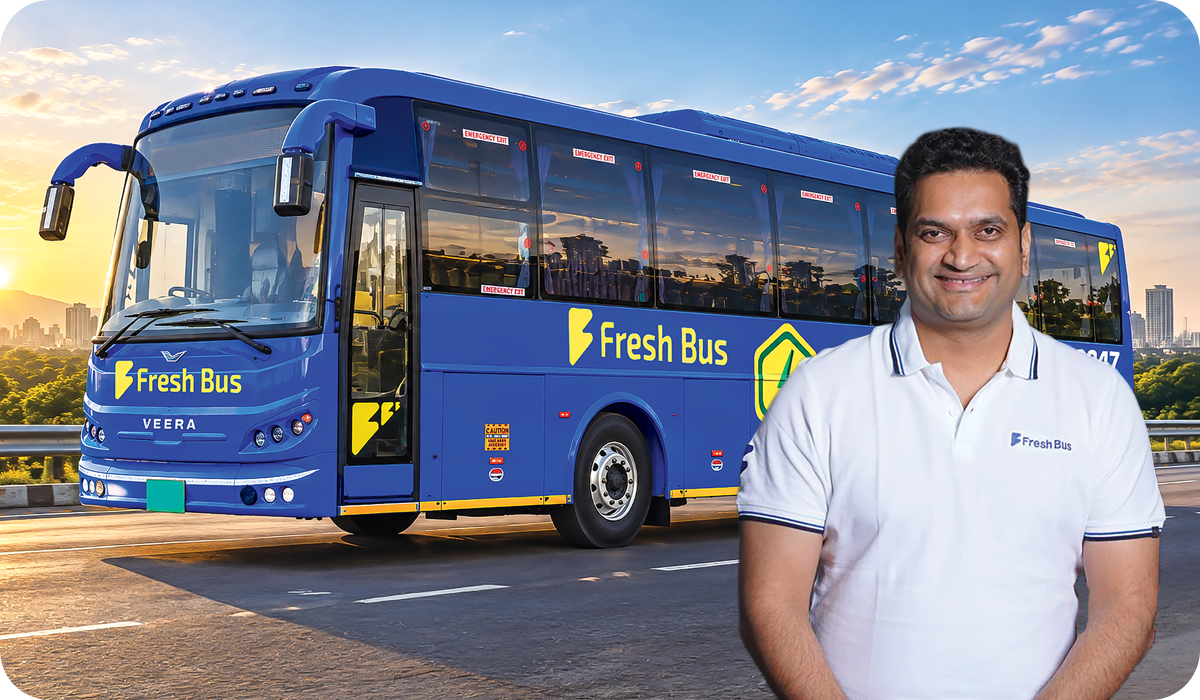
Fresh Bus is taking electric intercity mobility into a segment that remains largely untested in India: long-distance overnight travel.
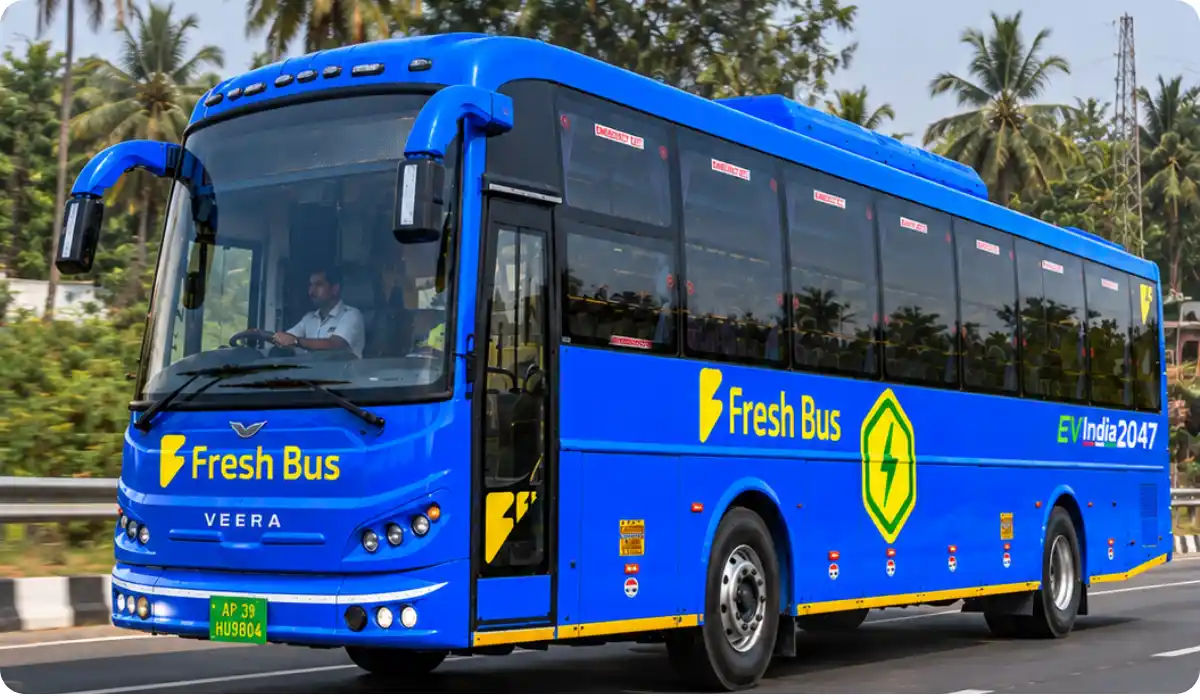
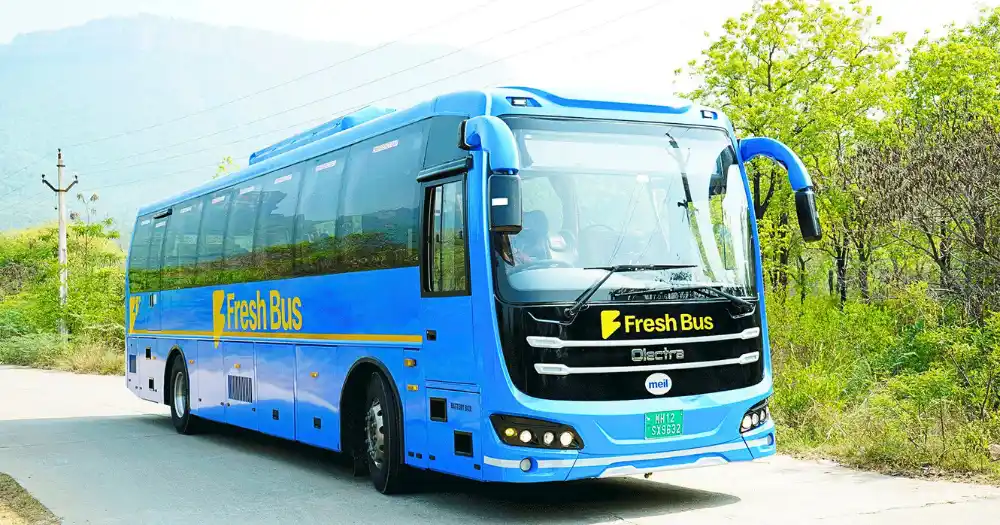
The company has launched an AC electric sleeper service between Bengaluru and Hyderabad, marking its first route of more than 600 km and its entry into long-haul electric bus operations. The service uses 13.5-metre all-sleeper electric buses with 36 sleeper berths, with two planned ultra-fast charging halts along the route.
For Fresh Bus, however, the significance of the Bengaluru–Hyderabad corridor goes beyond adding another route to its network. It is an opportunity to test whether electric buses can deliver a dependable, comfortable and commercially sustainable experience on a long-distance overnight journey.
Electric buses have so far found a more natural fit in city operations and shorter intercity routes, where charging can be planned around depots and terminals. A 600-km-plus corridor introduces a different set of operational challenges.
“The corridor allows us to take what we have learnt from shorter intercity routes and apply that experience to a longer journey. For us, Bengaluru-Hyderabad is not just about adding another route, but understanding how electric mobility can work at scale on longer intercity corridors.”
Sudhakar Chirra, Founder & CEO, Fresh Bus
Building the Long-Haul Electric Bus Operation
Fresh Bus has approached the service as an operating system rather than simply a deployment of electric buses.
The company has had to align charging, mid-journey halts, driver rostering, safety systems and passenger experience around the requirements of an overnight sleeper service.
“We had to ensure that the charging plan, planned mid-journey halt, driver rostering, safety systems and passenger experience all worked together. The objective was to make the journey as predictable and comfortable as possible for passengers,” Sudhakar says.
The buses are manufactured by Veera Vahana Udyog and feature a 320 kWh battery pack with an advertised range of around 300 km.
Fresh Bus has partnered with Exponent Energy for the charging infrastructure. The route uses 1.5 MW rapid-charging infrastructure, with charging planned at intervals of around 300 km.
Two ultra-fast charging halts have been planned along the corridor. Each charging session is expected to take approximately 15 minutes.
Making Charging Part of the Journey
For a long-haul electric bus, the challenge is not simply ensuring that there is enough energy to complete the route. The charging strategy also has to work for passengers.
Fresh Bus has therefore planned the charging stops around the natural rhythm of a long-distance journey. While the bus charges, passengers can take a break, stretch and refresh before continuing.
“The charging schedule has been planned around the natural requirements of a long-distance journey. Rather than treating charging as an additional stop purely for the bus, the mid-journey halts also allow passengers to stretch, refresh and take a break.”
Sudhakar Chirra
For an overnight sleeper service, that distinction matters. A charging stop that feels like a passenger break is fundamentally different from a stop where travellers are simply waiting for the vehicle to recharge.
“The aim is to ensure that the charging process fits into the overall journey without making the passenger feel that they are waiting specifically for the bus to charge,” he adds.
The EV–Diesel Economics
The long-haul electric bus proposition will ultimately have to work beyond the technology. It will also have to make commercial sense.
Fresh Bus says its operating data shows a conventional diesel sleeper costing approximately ₹67.4 per kilometre to operate, compared with around ₹50 per kilometre for its electric sleeper, a difference of nearly 30%, with lower energy costs being the primary driver.
At the same time, an electric bus can cost nearly twice as much as a comparable diesel bus. That means the economics cannot be built around energy savings alone.
“The economics of an electric sleeper have to be looked at over the entire operating cycle, not just the initial investment,” states Sudhakar.
Occupancy, utilisation, maintenance, financing, charging and overall route performance will all influence the business case.
A Test for Long-Haul Electric Mobility
The real significance of Bengaluru–Hyderabad will be determined by what Fresh Bus learns from operating the corridor.
The company wants the route to demonstrate that electric buses can deliver a safe, reliable, comfortable and commercially sustainable long-haul travel experience. It also hopes to understand which elements of the operating model can be replicated across other 600–700 km corridors.
“A year from now, we would like this route to demonstrate that electric buses can deliver a safe, reliable, comfortable and commercially sustainable long-haul travel experience,” Sudhakar adds.
That makes Bengaluru–Hyderabad more than another electric bus route.
If charging infrastructure, passenger experience, reliability, utilisation and economics can work together on a 600-km-plus overnight corridor, the experience could offer valuable lessons for the next phase of electric intercity mobility in India.
For Fresh Bus, it is a new route. For the electric bus industry, it is a much larger test of how far the technology can travel.
This interview was originally published in the September 2026 issue of our monthly magazine, The Bus Insider.
Catch the latest Bus Industry updates, Exclusive Interviews, Bus News, and International Bus News on Coach Builders India. Download the latest issue of the The Bus Insider magazine for more insights.