ATLS-Based Preparedness for Bus Accidents: Here’s What Even Non-Medical Professionals Can Do to Save Lives

Dr. Akash Datir explains how bus operators can train their staff in basic accident preparedness, just as is done in developed countries. With proper training, staff can respond confidently and effectively in emergencies, dramatically reducing preventable deaths and injuries on our roads.
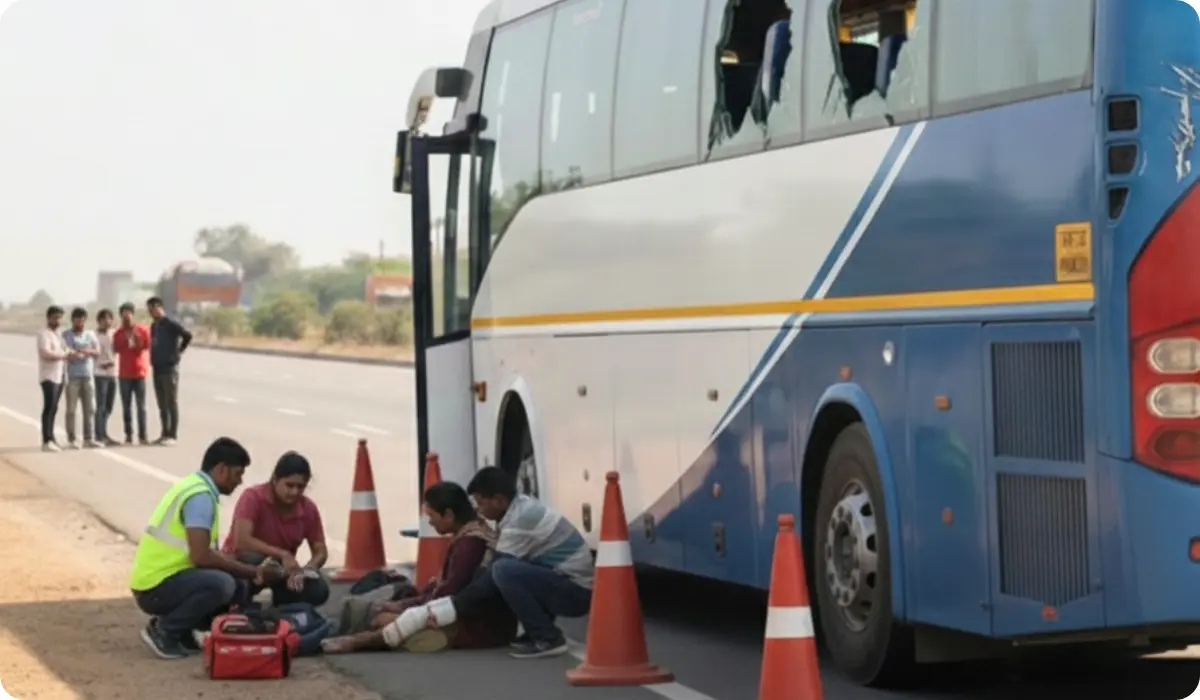
Bus accidents are unpredictable and stressful situations where the first few minutes decide who survives. Many of the injuries seen in such crashes are entirely survivable if the right steps are taken immediately, and most of these steps do not require medical training.
Modern trauma care, especially the ATLS (Advanced Trauma Life Support) framework, provides simple principles that anyone can follow. When adapted for buses, these principles can help drivers, conductors, and even passengers prevent avoidable deaths.
It is crucial for bus operators to train their staff in basic accident preparedness, just as is done in developed countries. With proper training, staff can respond confidently and effectively in emergencies, dramatically reducing preventable deaths and injuries on our roads.
This guide explains those life-saving steps in clear, practical language. Each section includes easy-to-follow bullet points so bus crew members know exactly what to do, whether it involves controlling bleeding, managing fractures, or responding to fire and smoke.
With the right awareness and training, every person on a bus can play a role in protecting lives until professional help arrives.
Aggregators Can Transform Intercity Bus Safety Standards, Says IntrCity SmartBus’ Dinesh Rathi
Common Injuries in Bus Accidents
Bus accidents typically involve high-energy impacts, sudden braking, falls inside the cabin, and in some cases, fire or smoke exposure. As per trauma patterns, the most common injuries include:
- Head Trauma
- Chest and Abdominal Injuries
- Fractures
- External Bleeding
- Burns and Smoke Inhalation
Understanding these injuries helps responders prioritise what matters most: airway, breathing, bleeding control, and safe evacuation.
All India Tourist Permit: From Vision to reality, Boon to Bane 2021-2025
The First 5 Minutes: What Bus Staff Should Do (ATLS-Adapted Protocol)
The first few minutes after a bus accident are the most critical. Before applying emergency response principles, it is essential to ensure the scene is safe and call emergency services immediately. Early action can save lives and prevent further injuries.
ATLS teaches a simple, step-by-step method that anyone can follow to address life-threatening problems quickly. The core principle is ABC – Airway, Breathing, Circulation.
A – Airway
Ask the injured person to talk. If they can talk, their airway is open.
If the person is unconscious:
- Gently lift the chin forward
- Avoid tilting the head back if you suspect a neck injury
- Clear the mouth of visible obstructions such as vomit or loose dentures.
B – Breathing
Check whether the person is breathing normally.
- Look for chest movement
- Listen for breathing sounds
- Feel for air movement.
If there is no breathing, start hands-only CPR with firm chest compressions in the centre of the chest. If difficulty in breathing is due to smoke in case of a bus fire:
- Move the person to fresh air
- Loosen tight clothing
- Keep them sitting upright.
C – Circulation and Bleeding
Uncontrolled bleeding can kill within minutes. If anyone is bleeding profusely:
- Press firmly on the bleeding area using cloth or bandages
- Do not remove soaked bandages – add more layers on top
- If trained and available, use a tourniquet only for severe limb bleeding.
AIS 153 Explained: Here’s What Bus Body Builders Need
First-Aid Steps Anyone Can Perform (Safe, Effective, ATLS-Based)
Even without medical training, anyone on the bus can perform basic first-aid to prevent injuries from getting worse. The goal is to stabilize the victim until professional help arrives.
Fracture Care
- Do not straighten or move the injured limb
- Support it with a sling, folded cloth, or triangular bandage
- Immobilize the joints above and below the fracture
- Keep the person calm and still.
Head Injuries
- Keep the person awake and talking
- Do not give food, water, or painkillers
- Monitor for vomiting, confusion, or seizures. Any of these require urgent hospital care.
Unconscious Passenger
- If the person is breathing and there is no suspected spinal injury, place them in the recovery position.
- If spinal injury is possible, keep them flat, support the head, and avoid any movement.
Important: You do not need to diagnose injuries. Your role is to prevent them from worsening until trained help arrives.
GEMS Shows How Private Operators Can Electrify India’s Intercity Highways
Essential Bus Emergency Kit Contents (And How to Use Them)
Every bus should carry a well-stocked and regularly checked emergency kit. The right tools can make the difference between life and death in the first few minutes after an accident.
First-Aid Materials
- Sterile gauze – for controlling bleeding
- Trauma dressings – for large wounds
- Adhesive bandages – for minor cuts
- Roller bandages – for securing dressings or splints
- Triangular bandage / sling – for immobilizing limbs
- Sterile gloves – to prevent infection
- Tourniquet – only for severe limb bleeding
- Antiseptic wipes – for cleaning wounds
- Clean cloths or absorbent pads – for controlling bleeding and covering burns
Emergency Tools
- Fire extinguisher (ABC type) – for small fires
- Seat-belt cutter – to release trapped passengers quickly
- Glass-breaking hammer – for emergency exits
- Flashlight – for visibility in dark or smoky conditions
- Thermal blanket – to prevent shock
- Smoke mask (optional but recommended) – for protection during fire or smoke exposure
Documentation
- Contact numbers for local hospitals and ambulance services en route
- Standard accident reporting form
- Bus operator’s emergency response SOP.
How Bus Crew Can Assist Until Help Arrives
.webp "ATLS-Based Preparedness for Bus Accidents: Here's What Even Non-Medical Professionals Can Do to Save Lives")
Even after calling emergency services and applying first aid, bus staff play a crucial role in keeping passengers safe and stable until professional help reaches the scene.
- Keep victims warm, shock increases with cold
- Recheck ABC (Airway, Breathing, Circulation) every few minutes
- Speak calmly and reassuringly; panic increases heart rate and bleeding
- Prevent crowding around injured individuals to avoid additional harm
- Ensure children stay with known adults
- Clear a path for paramedics when they arrive
- Avoid unnecessary movement, lifting, or shifting of injured passengers.
Even simple reassurance, calm instructions, and maintaining order can stabilize frightened passengers and prevent further injuries.
Bus Fire & Smoke Response (High-Priority Guidance)
Bus fires spread quickly, and every second counts. Immediate, calm action is critical to save lives.
A. Immediate Evacuation
- Shout “FIRE – EVACUATE NOW” to alert everyone
- Assist elderly, children, and passengers with disabilities
- Use the nearest exit and encourage passengers to stay low
- Move everyone at least 50–100 metres away from the bus.
B. Using a Fire Extinguisher
- Only attempt if the fire is small and manageable.
- Remember PASS:
- Pull the pin
- Aim at the base of the flames
- Squeeze the handle
- Sweep side to side
- If the fire grows or smoke thickens, stop and evacuate immediately.
C. Smoke Inhalation
Signs include coughing, noisy breathing, hoarseness, or black soot around the nose and mouth.
- Move victims to fresh air immediately.
- Loosen tight clothing and encourage slow, calm breathing.
- Give water only if the person is fully conscious.
Important: Anyone with hoarseness, burns around the mouth, or difficulty breathing must get urgent hospital care.
D. Burns First-Aid
- Cool the burn area with running water for at least 20 minutes
- Remove jewellery early, before swelling begins
- Do not remove melted clothing
- Cover burns with a clean cloth or non-stick dressing
- Never apply ice, toothpaste, ghee, or powders.
Can Electric Buses Go the Distance? LeafyBus’ CEO Rohan Dewan Is Betting on It
Towards Safer Bus Travel
Bus accidents are unpredictable and frightening, but the first few minutes after a crash are critical. Most injuries are preventable if bus staff are trained to respond quickly and effectively, just like in developed countries.
With proper training in emergency response, a clear understanding of first-aid principles, and well-equipped buses, operators can dramatically reduce preventable deaths and injuries on our roads. Prepared staff, aware passengers, and the right equipment can make every bus a safer place.
Investing in training and preparedness is not just a responsibility; it is the key to saving lives and ensuring safer journeys for all passengers.
This article was originally published in the November 2025 issue of our monthly magazine, The Bus Insider.
Catch the latest Bus Industry updates, Exclusive Interviews, Bus News, and International Bus News on Coach Builders India. Download the latest issue of the The Bus Insider magazine for more insights.