Bus Fires in India: Are Bus Operators Solely Responsible?

Penalizing bus operators is not a sustainable solution. Until the gap between what is certified on paper and what is allowed on the road is addressed, India will continue to see tragedies that could have very well been prevented.
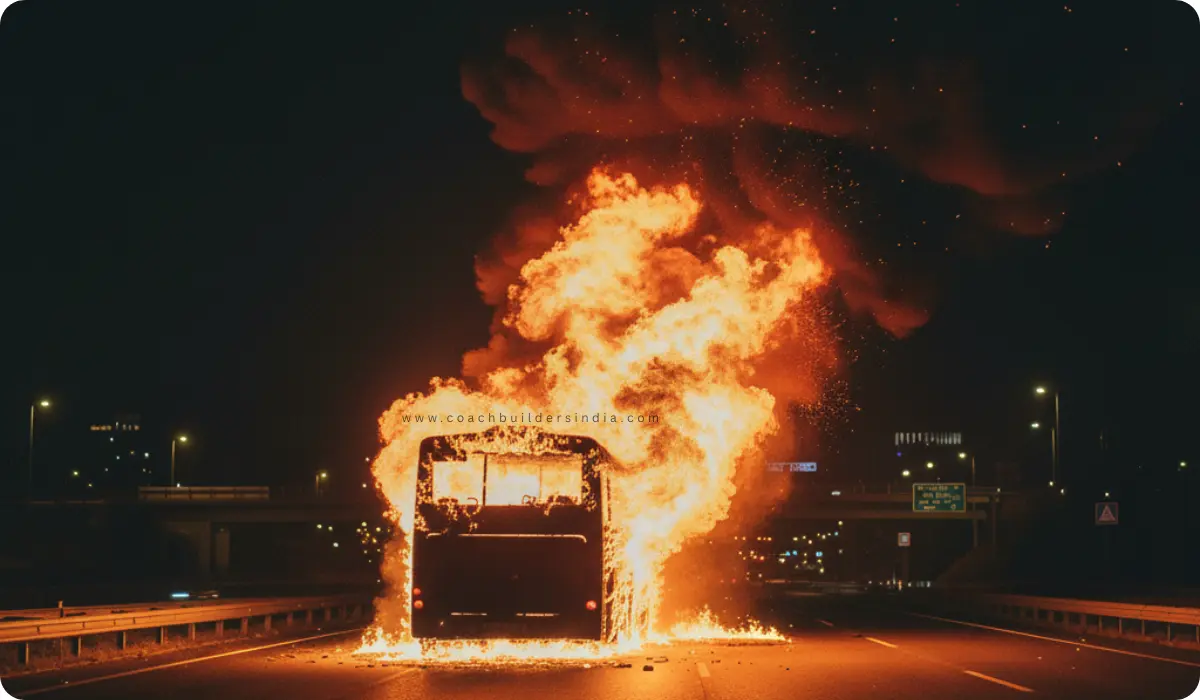
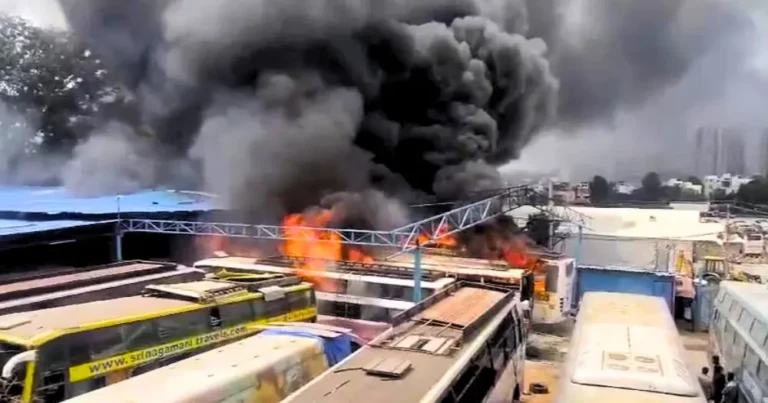
India’s intercity bus network just lived through one of its toughest periods in recent memory. A string of deadly bus fires shook public confidence, ignited national debate, and pushed the industry into confronting a question it has comfortably sidestepped for years — how safe are our buses, really?
As the images spread across news channels and social media, so did confusion. Verified engineering facts mixed with speculation. Every accident was painted with the same brush. And in the noise, one truth got lost — India’s bus safety story is not simple. It is layered. It is systemic.
And it goes far beyond any single operator or vehicle.
It is the story of a fragmented ecosystem where every stakeholder holds a piece of responsibility, yet no one controls the chain end-to-end.
India does not lack safety standards. It suffers from gaps in how those standards are enforced, interpreted, and followed on the ground. And in an industry where one weak link can put hundreds of lives at risk, that gap becomes fatal.
Let’s try to step back from the daily outrage and look at the full picture, the engineering realities, the systemic failures, the operator-level choices, and the urgent need for shared accountability. Because if there was ever a moment for the industry to reset, it is now!
All India Tourist Permit: From Vision to reality, Boon to Bane 2021-2025
A Fragmented Safety Chain Held Together by Loose Ends
A bus is not built in one place. It is assembled across an ecosystem that rarely speaks in one voice. The chassis comes from the OEM. The body is constructed by a bus body builder, sometimes certified, often not. Electrical systems may be installed by third-party vendors. Permits and fitness checks come from the RTO and local transport offices. Enforcement lies elsewhere.
Everyone participates but no one supervises the whole journey. This is the heart of India’s bus safety challenge — a chain built across silos, where alignment is optional, and accountability is diluted at every step.
In a recent white paper released by IntrCity SmartBus, coach building bigwigs like the MG Group and S.M. Kannappa Automobiles point out that India’s Automotive Industry Standard codes for the bus industry are strong on paper and, in many areas, comparable to European frameworks.
But the gulf lies in how rigorously Europe enforces its rules across every bus, every design variation, every fitment, and every operator. In contrast, enforcement and implementation remain uneven, inconsistent, and worryingly easy to bypass in India.
And this lack of alignment becomes glaringly visible when the system comes under pressure, particularly during cases that make national headlines.
Here’s How Bus Operators Can Train Staff for Emergency Preparedness During Accidents
How Responsible Are Operators? More Than They Admit, Less Than They’re Blamed For
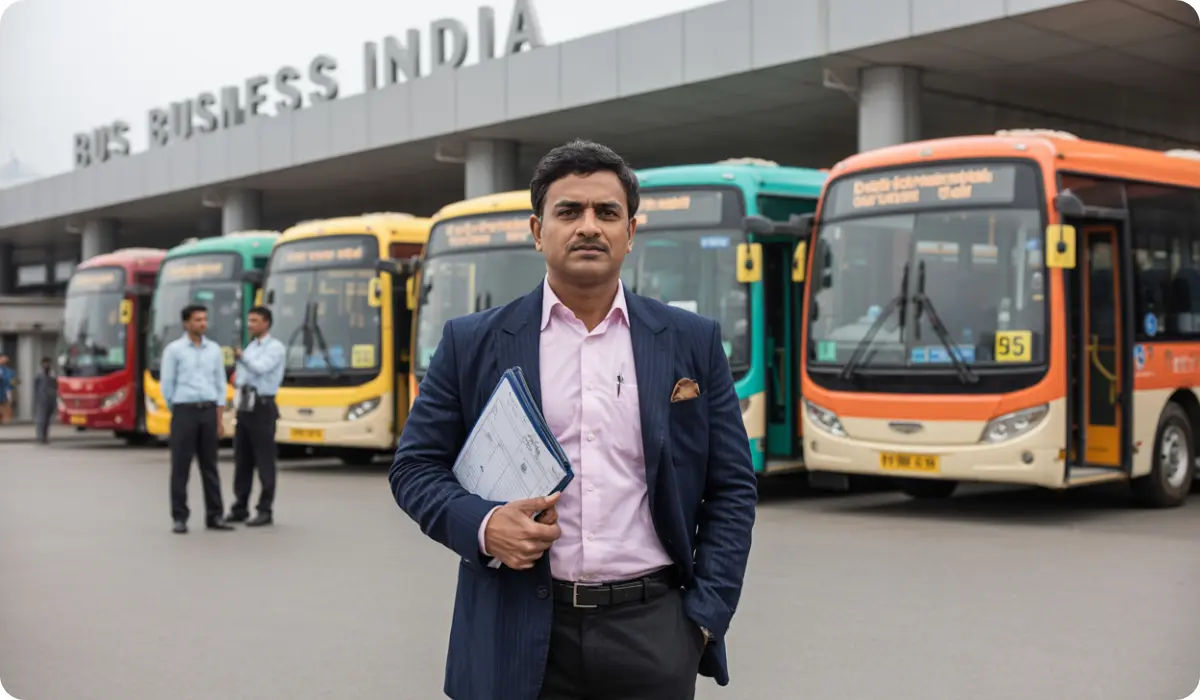
When a bus accident makes the news, public attention almost always turns to the operator. It is the name on the vehicle, the brand the passenger remembers, and therefore the easiest point to blame. But the truth is far from straightforward. Operators do shoulder responsibility — but not all of it is theirs.
Operators do make choices that directly affect passenger safety. And one of the most critical choices is where they build their buses.
“Unauthorised bus body-building continues to plague the industry, with flammable materials, substandard wiring, structural deviations and inadequate emergency exits compromising safety at every level,” states Dr. Harish Sabharwal, National President, All India Motor Transport Congress (AIMTC).
The reason is simple — the cost difference. In a business with volatile demand and thin margins, the lowest quote often looks like the most practical decision.
But the trade-off is severe.
Non-standard builders frequently bypass AIS norms. They use cheaper wiring, flammable materials, unstable layouts, and undersized components that save money upfront but compromise safety in the long run.
But it doesn’t just end there. Operators often add aftermarket modifications that strain the electrical system further. These changes, often made for passenger convenience or aesthetics, become major ignition points.
“Non-certified technicians don’t fully understand OEM-specified current load and wire gauge requirements. They install cheaper, undersized wiring. The cables overheat, the insulation melts, and a short circuit becomes inevitable,” states Abhijeet Konduskar, CEO of Konduskar Travels Pvt. Ltd.
And then there is cargo, a problem the industry has long known but rarely confronted publicly. Roof loads, underbelly consignments, and flammable goods piled into sleeper coaches destabilise the vehicle and raise the risk of rollovers, brake failures, and high-impact accidents. Several operators acknowledged that this one practice, often driven by competitive pressure, significantly heightens both fire and rollover risks.
Dr. Sabharwal explains, “Additional height and instability caused by roof loads make it more likely for vehicles to come into hazardous proximity with electrical infrastructure, amplifying the risk for catastrophic fires and severe casualties.”
The fire risk multiplies when the cargo itself is flammable. The Kurnool tragedy showed this with brutal clarity. The smartphone consignment carried inside the bus intensified the blaze, turning an already severe incident into a deadly inferno.
“It is a systemic failure where weak regulation and poor enforcement make cutting corners easy. Attributing blame solely to the operator is an over-simplification of a complex problem.”
Dr. Harish Sabharwal, National President, AIMTC
Aggregators Can Transform Intercity Bus Safety Standards, Says IntrCity SmartBus’ Dinesh Rathi
The System Fails Before the Bus Moves
To be honest, the responsibility for safety begins much earlier, long before a bus ever reaches an operator’s depot. And this is where the conversation needs far more honesty.
Technically, bus body builders are the ones technically responsible for constructing buses that meet government-prescribed safety codes. This responsibility is underlined by the simple fact that the bus body builder is the entity that applies for, receives, and maintains AIS certification. And they are the ones expected to ensure that every bus they fabricate matches the approved design and not a cheaper, diluted version of it.
When bus body builders deviate from these standards, the compromise is not financial. It is life-threatening.
But the accountability does not end here either!
If a bus body is non-compliant, it should never reach the road in the first place. That is the role of transport authorities — registration officials, fitness inspectors, and enforcement teams who serve as the final gatekeepers. They are expected to verify that the bus matches the approved design and carries the correct certifications. They are responsible for ensuring that a structurally weak, electrically unsafe, or non-compliant bus is rejected long before it carries passengers.
Yet the reality we see on the roads tells a very different story.
Buses that fall short of prescribed safety standards routinely secure registration certificates and fitness approvals. They pass through checkpoints. They operate across state borders. And they do so because procedural lapses, inconsistent inspections, and weak oversight create gaps wide enough for unsafe vehicles to slip through.
Until this systemic gap is addressed, the gap between what is certified on paper and what is allowed on the road, India will continue to see tragedies that could have very well been prevented.
And this is why simply penalising operators after a fire or accident is not a sustainable solution. It punishes the last person in the chain, while the failures that allowed the unsafe bus to exist in the first place remain unchallenged.
Dr. Sabharwal calls it what it is. “It is a systemic failure where weak regulation and poor enforcement make cutting corners easy. Non-compliant buses still receive fitness certificates. Several States have failed to implement and enforce standards effectively. Attributing blame solely to the operator is an over-simplification of a complex problem.”
“Non-certified techs often ignore OEM current specs and wire gauges, installing undersized cabling that overheats, melts insulation, and triggers a short circuit.”
Abhijeet Konduskar, CEO of Konduskar Travels
Manoj Soni’s Vision to Transform YoloBus into a Smart, Sustainable Mobility Leader
The Road Ahead: What Must Change
.webp?updatedAt=1762347241587 "Bus Fires in India: Are Bus Operators Solely Responsible?")
India’s bus industry is standing at a crossroads. The fires of the past month have exposed every weak link in the chain, but they’ve also made one thing clear — the path to safer mobility already exists. The industry just needs to walk it together.
The first step is enforcement. Not new rules, not fresh codes but enforcement. All buses built in India must be built according to the amended Automotive Industry Standard (AIS) formulated by the Ministry of Road Transport & Highways (MoRTH).
“Accidents may be unavoidable, but the severity of their impact isn’t. As operators, it’s our duty to work only with certified body builders who follow the latest AIS norms. Compliance isn’t a checkbox, it’s a life-saving responsibility,” says Ankush Aggarwal, CMD, Laxmi Holidays.
Second, bus body builders must be held accountable for compliance. Certification has to be transparent, standardised, and corruption-free.
And finally, the industry must invest in its people: better driver training, mandatory rest hours, stronger staff welfare, and real safety communication before every trip
If India gets these steps right, the impact will be immediate and measurable. Fewer fires. Fewer accidents. More accountability. More trust. A safer, stronger intercity mobility network that lives up to its promise.
“Accidents may happen, but their impact can be minimized. Operators must partner only with certified body builders following the latest AIS norms. Compliance isn’t a formality—it saves lives.”
Ankush Aggarwal, CMD, Laxmi Holidays.
This Bus Operator from Assam Turned the Worst Seats into the Hottest Tickets
Rebuilding Trust Begins Now
The past month has forced the industry to confront a reality it could no longer ignore. Fires didn’t just destroy buses. They damaged public trust. And in the intercity mobility business, trust is everything.
But crises also bring clarity. They expose what’s broken. They show what must change. And they remind every stakeholder that safety isn’t a box to tick. It’s a responsibility shared across the entire chain.
India has the standards. It has the engineering capability. It even has the technology. What it needs now is alignment, consistency, and discipline. And a willingness to enforce the rules with the seriousness they deserve.
The industry has reached its turning point. The question is no longer “Who is to blame?” but “Who will step up?” If every link in the chain strengthens its part and works with the rest, India can set a new benchmark for safe, modern intercity travel.
Rebuilding trust begins now. And if the industry chooses to, this moment of crisis can become the moment India’s buses finally turn a corner.
This article was originally published in the November 2025 issue of our monthly magazine, The Bus Insider.
Catch the latest Bus Industry updates, Exclusive Interviews, Bus News, and International Bus News on Coach Builders India. Download the latest issue of the The Bus Insider magazine for more insights.