Bus Fire Safety: The Critical Role of ACP Compliance in Bus Body Building

Mohit Garg, CEO & Managing Director of INALCO, highlights the importance of ACP compliance and proper aluminium thickness in bus construction in improving fire safety and passenger protection in buses.
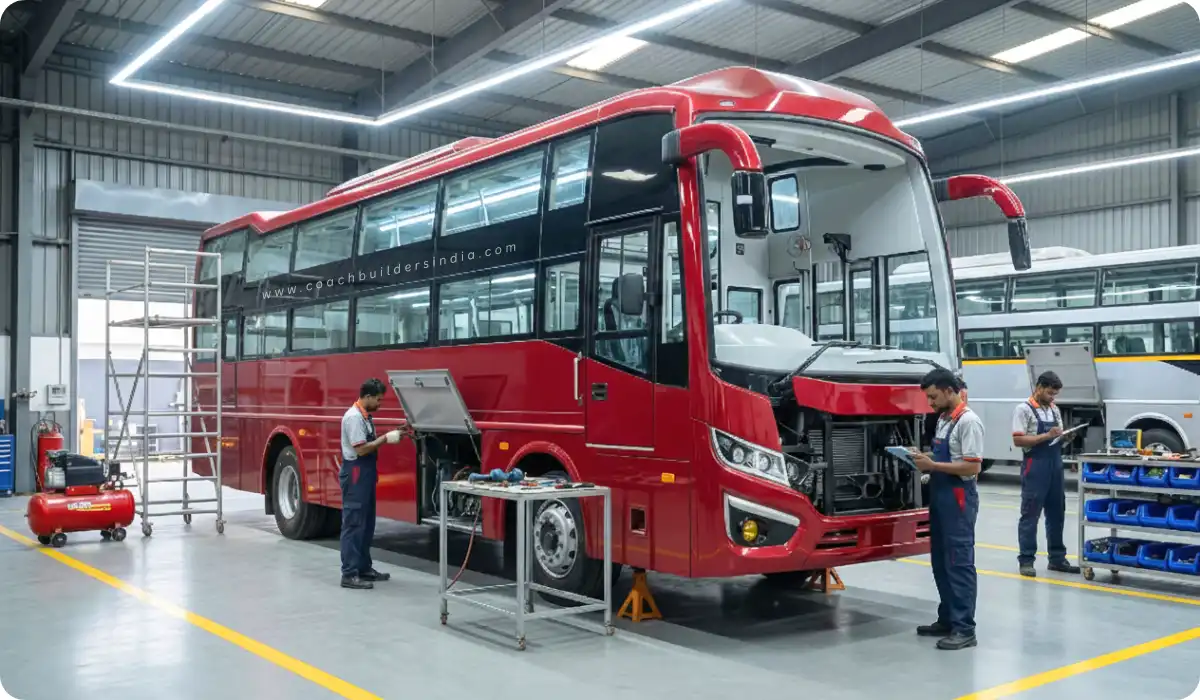
The recent rise in bus fire incidents across India has renewed national attention on passenger safety and the materials used in bus construction. These events have highlighted the importance of evaluating the fire performance and regulatory compliance of interior components, particularly ceiling panels, partitions, and other surfaces where fire can spread quickly.
At INALCO, we engage closely with the bus body building ecosystem as a supplier of aluminium sheets, coils, and chequered plates. We also support ACP manufacturers who supply materials to bus fabricators.
This position gives us a view into how material choices influence overall safety, and why adherence to established standards has become more important than ever.
Bus Fires in India: Are Bus Operators Solely Responsible?
ACP and Its Growing Role in Bus Body Construction
Aluminium Composite Panels (ACP) have been commonly used in bus interiors over the past decade. Their light weight, ease of fabrication, and clean finish make them suitable for a range of applications, including:
- Ceiling panels
- Passenger cabin partitions
- Wall lining
- Decorative interior cladding
As a result, ACP has become an integral part of modern bus body design. However, the safety performance of ACP depends largely on one critical parameter: the base aluminium thickness (BMT).
This specification determines the structural stability of the panel, its reaction to heat, and its behaviour during a fire. When the BMT meets prescribed standards, ACP performs reliably.
When it does not, it introduces risks into the vehicle, especially in the case of a fire incident.
Here’s How Bus Operators Can Train Staff for Emergency Preparedness During Accidents
A Concerning Trend: Thinner Aluminium Skins in ACP
In recent years, a noticeable shift has taken place within the ACP manufacturing ecosystem. To reduce costs, several products in the market now use significantly thinner aluminium skins, in some cases as low as 0.10 mm on each side.
While this may appear to offer short-term economic advantages, it introduces serious safety concerns for applications in bus interiors.
The BIS standard IS 17682:2021 clearly specifies a minimum base metal thickness of 0.25 mm (Top) and 0.25 mm (Bottom) for ACP used in such environments.
A thicker, fire-rated panel helps delay the advance of heat and flame, providing critical extra time for evacuation in an emergency situation.
Despite this, thinner ACP remains in use due to cost pressures and the lack of strict enforcement. This deviation from prescribed standards reduces the panel’s fire resistance and compromises passenger safety. As a result, the use of substandard ACP has become one of the material-related vulnerabilities in the bus body building ecosystem.
Aggregators Can Transform Intercity Bus Safety Standards, Says IntrCity SmartBus’ Dinesh Rathi
Non-Compliant ACP: A Hidden Risk
To strengthen material safety, the Bureau of Indian Standards (BIS) introduced mandatory certification for ACP under IS 17682.
While the standard is now officially mandated, a significant portion of the ACP industry has yet to fully transition to compliant manufacturing. This delay has directly contributed to continued safety gaps in the bus body building sector, as noncompliant materials remain in circulation and are still installed in commercial vehicles.
Each instance of non-adherence increases the risk of unsafe products entering the supply chain. Given the high passenger density in buses, particularly in hybrid configurations with both seats and sleeper berths, material quality becomes more than a regulatory requirement; it becomes a critical determinant of passenger safety.
Safety Comparison: 0.15 mm vs 0.25 mm Aluminium Skin
| Parameter | 0.15 mm Skin ACP (FR) | 0.25 mm Skin ACP (FR) |
| Fire Integrity | Weak – Deforms Early | Stronger – maintains barrier longer |
| Heat resistance | Lower | Higher |
| Smoke suppression | Moderate | Better (slow core exposure) |
| Structural strength | Weak | Strong |
| Impact/vibration safety | Lower | Higher |
| Application in buses | Not recommended | Highly recommended |
| Regulatory comfort | Low | High |
Recommendations for Bus Body Builders
To strengthen safety across the bus manufacturing ecosystem, body builders need to prioritise compliant materials and proven technologies. Based on current standards and observed industry practices, the following steps are strongly recommended:
1. Use ACP that Meets IS 17682:2021 Standards
This includes adherence to the minimum base metal thickness of 0.25 mm (Top) and 0.25 mm (Bottom). Compliant ACP offers better fire performance, improved durability, and greater resistance to structural degradation.
2. Consider Pre-Painted Solid Aluminium Panels
In applications where safety and long-term performance are critical, solid aluminium panels serve as a reliable alternative. They offer:
- Improved fire resistance
- Higher structural strength
- No risk of delamination
- Uniform and predictable material behaviour
Because they do not rely on adhesives or composite cores, solid aluminium sheets provide an additional layer of safety in fire-sensitive areas.
INALCO: The Silent Strength Behind India’s Modern Bus Fleets
A Call for Stronger Enforcement and Industry Awareness
Improving bus safety in India requires collective responsibility across the full ecosystem. Bus manufacturers, ACP suppliers, regulatory agencies, and government testing bodies each play a critical role in ensuring that only compliant materials enter the supply chain.
Strengthened enforcement, supported by consistent inspections and clear accountability, is essential to eliminating substandard products from the market.
With millions of passengers relying on intercity buses every day, including sleeper coaches where emergency evacuation time is limited, material quality becomes a central factor in protecting lives. The adoption of certified and compliant materials should not be viewed as an optional choice, but as a fundamental requirement for safe mobility.
At INALCO, we remain committed to working with industry partners and regulatory institutions to help raise safety standards and promote the use of approved materials. The path to safer bus travel begins with awareness, adherence to standards, and a shared commitment to prioritising passenger safety in every stage of bus construction.
This article was originally published in the November 2025 issue of our monthly magazine, The Bus Insider.
Catch the latest Bus Industry updates, Exclusive Interviews, Bus News, and International Bus News on Coach Builders India. Download the latest issue of the The Bus Insider magazine for more insights.