Building Lighter Buses: INALCO’s Role in the Future of Indian Bus Manufacturing

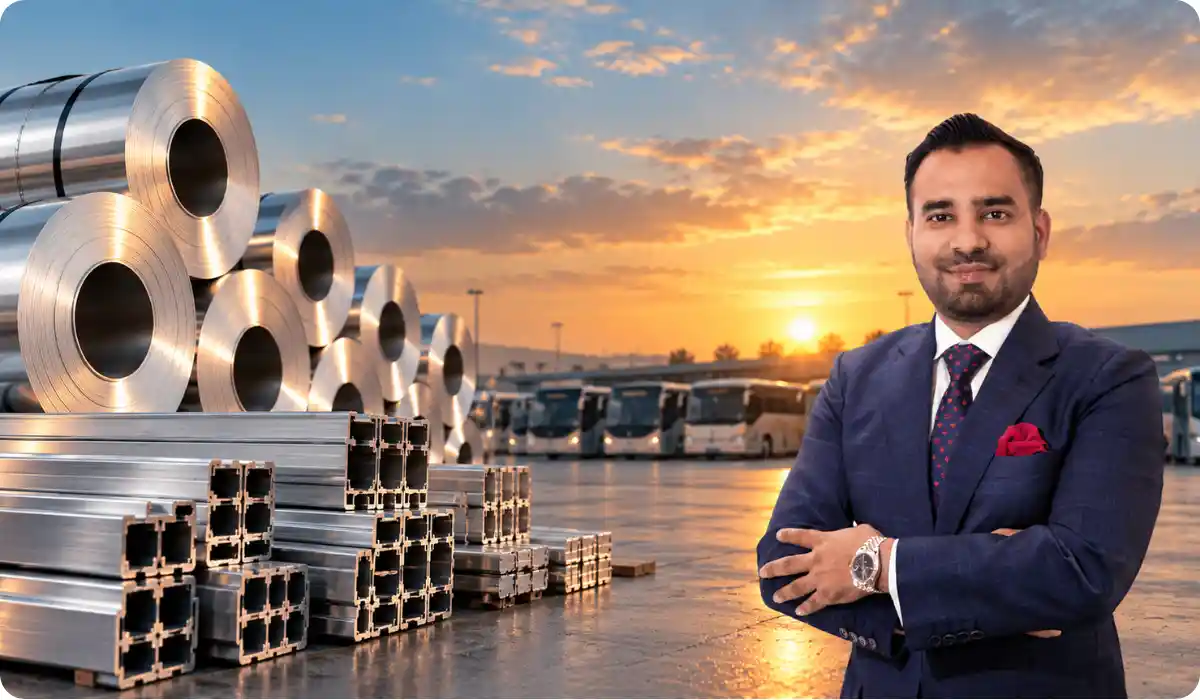
India’s bus manufacturing industry is changing how it designs and builds vehicles. Premium coaches are becoming more sophisticated, sleeper buses are evolving, and electric buses are gaining ground. As manufacturers focus on efficiency, durability and passenger experience, material selection is becoming an increasingly important part of vehicle engineering.
This is where INALCO Pvt. Ltd. sees an opportunity to contribute to the industry’s transformation.
The company supplies aluminium solutions to OEMs, bus body builders and mobility manufacturers across India, supporting applications ranging from structural components and flooring to interiors and specialised assemblies.
“Bus manufacturing is moving beyond conventional fabrication towards a more engineering-led approach. Material selection now influences not just durability and aesthetics, but also efficiency, performance and lifecycle value. This makes material innovation central to the next phase of the industry.”
Mohit Garg, CEO, INALCO
Aluminium for Modern Bus Manufacturing
INALCO’s portfolio includes aluminium coils, sheets, chequered plates and colour-coated coils. These products find applications in bus body structures, flooring systems, staircases, interior panelling and other components.
Aluminium’s lightweight properties and corrosion resistance make it relevant to manufacturers seeking to balance vehicle weight, durability and long-term performance. However, bus applications also demand materials that can withstand vibration, temperature variations and continuous use under demanding operating conditions.
“Our role goes beyond supplying aluminium; it is about helping manufacturers solve engineering challenges. The real value lies in combining material performance with consistency, application knowledge and reliability. That is how a supplier becomes a long-term manufacturing partner,” Garg says.
Supporting Premium Coach Manufacturing
The growth of premium intercity travel has raised expectations around coach design, interior finish and durability. Manufacturers increasingly need materials that support sophisticated interiors while delivering reliable performance over years of operation.
Meeting these requirements also depends on manufacturing consistency. As OEMs and body builders pursue greater standardisation, suppliers must deliver materials that meet quality expectations across production volumes.
For INALCO, manufacturing capability is therefore about more than capacity. Precision, process control and reliable supply are equally important to supporting the needs of bus manufacturers.
Lightweighting and the Electric Bus Opportunity
Electric mobility is creating another important application for aluminium. Battery packs add considerable weight to electric buses, making weight optimisation an important consideration in vehicle engineering.
Aluminium used in flooring, structural applications and interior components can help manufacturers manage vehicle weight. The extent of the benefit depends on the specific design and application, but lightweight materials can contribute to overall vehicle efficiency.
“As electric buses become more prevalent, lightweighting will be an increasingly important part of vehicle engineering. Every material decision must be evaluated in terms of its contribution to efficiency, performance and long-term operation. Aluminium can play a meaningful role in helping manufacturers meet these demands.”
Mohit Garg
Building the Next Generation of Buses
As the Indian bus industry advances towards premiumisation, electrification and higher engineering standards, material suppliers are becoming important partners in vehicle development.
INALCO sees collaboration with OEMs and body builders as central to this shift, helping manufacturers identify material solutions suited to evolving product requirements.
“The future of bus manufacturing will be shaped by more than powertrain technology alone. It will depend on smarter material choices, stronger engineering and closer collaboration across the value chain. Our ambition is to help manufacturers translate these advances into better mobility solutions,” Garg says.
For India’s bus manufacturing ecosystem, the next phase will depend not only on how vehicles are powered, but also on how intelligently they are designed, engineered and built.
Catch the latest Bus Industry updates, Exclusive Interviews, Bus News, and International Bus News on Coach Builders India. Download the latest issue of the The Bus Insider magazine for more insights.