Inside Go Tour Travels: Narendra Vallabhaneni on Building a Sustainable Intercity Bus Business

Narendra Vallabhaneni, Managing Partner, Go Tour Travels & Holidays, reveals how the company grew from four buses to a 52-coach fleet by focusing on discipline, service quality, and sustainable expansion.
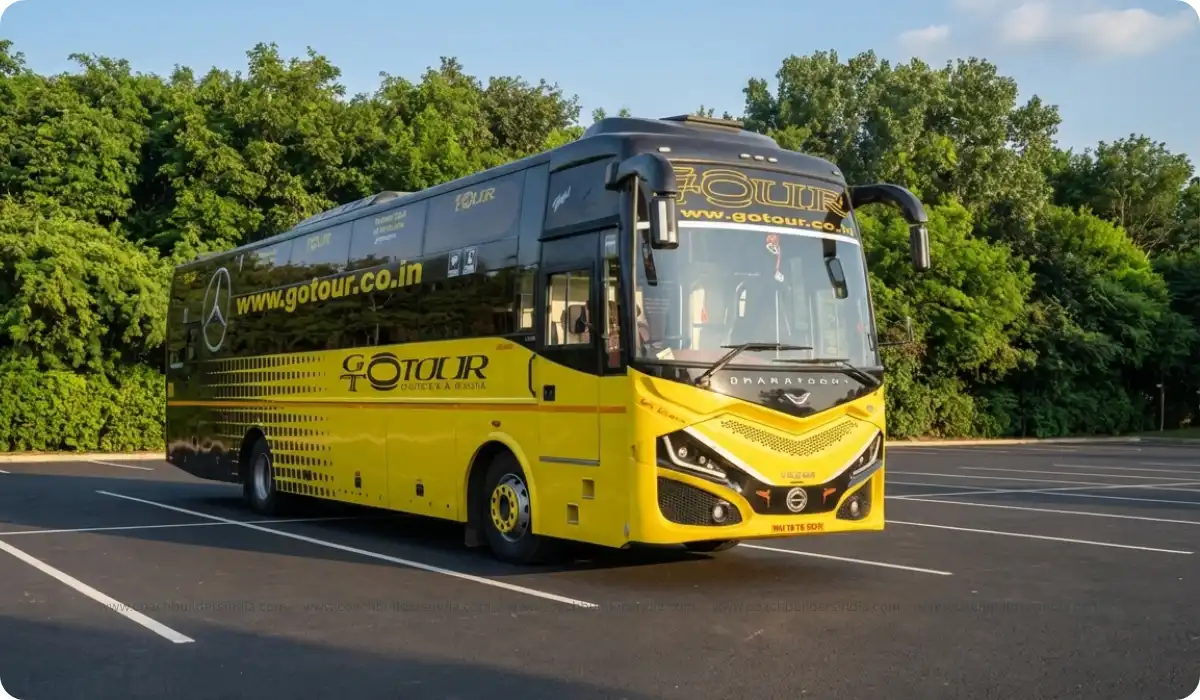
The intercity travel sector in India is undergoing a structural shift. Rising operational costs, intense competition, and changing passenger expectations are pushing bus operators to rethink the traditional “buy and run” model.
For modern fleet operators, scale alone is no longer enough – consistency, technology adoption, and service quality are becoming the real differentiators.
Go Tour Travels & Holidays, led by Managing Partner Narendra Vallabhaneni, along with Vamsi Krishna M., represents this new wave of bus operators who combine business discipline with a service-first mindset.
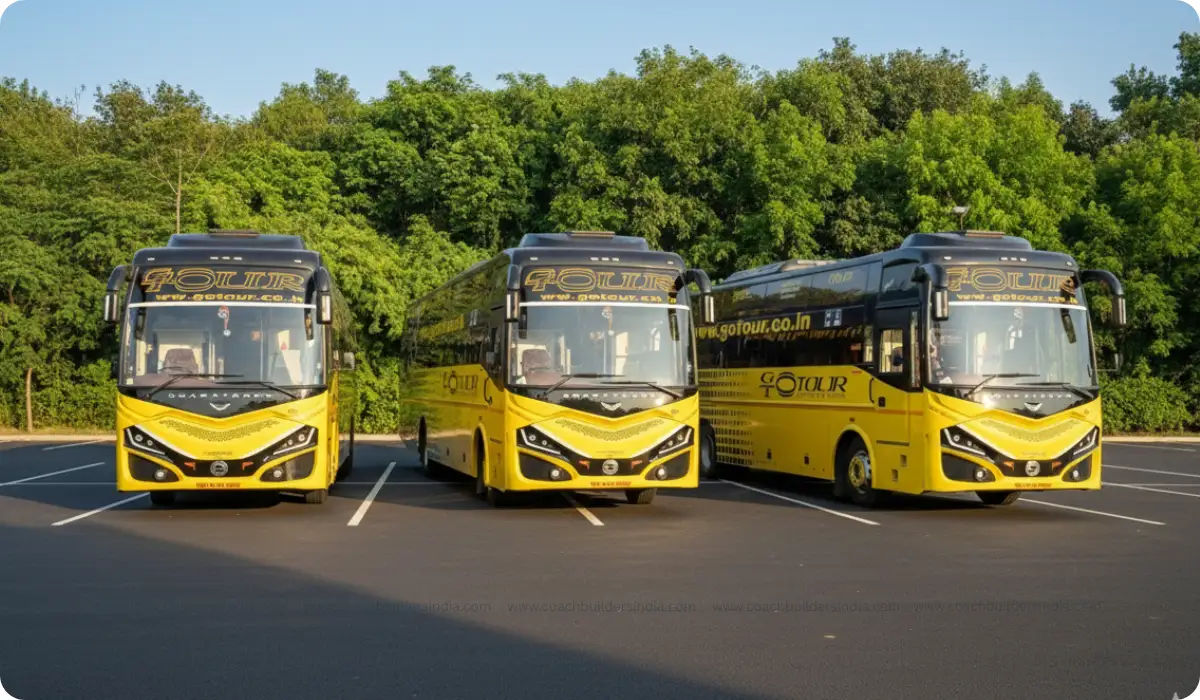
What began in 2016 with just four leased buses has now grown into a 52-coach premium AC bus fleet serving South India.
In this exclusive conversation, Go Tours Travels & Holidays owner Narendra Vallabhaneni shares how the company is building a sustainable, tech-driven intercity mobility business – and why the future of bus travel depends on discipline more than aggression.
Excerpt from the interview: Narendra V., Go Tour Travels & Holidays
Can you tell us about your journey and how Go Tour established its market presence?
Our foundation is built on passion rather than just profit. I come from an IT background, but I have always had a strong interest in the bus industry.
We started Go Tour in 2016 with just four leased buses. There was no aggressive expansion plan initially; the focus was simply on getting the basics right.
By following a service-first approach, we gradually scaled into a full-fledged operation. Today, we operate a fleet of 52 premium AC coaches, and our identity is built around reliability and consistent service in the South Indian market.
In such a competitive market, what is your strategy to stay ahead?
The intercity bus industry is highly competitive. But we avoid price wars completely.
Instead, we focus on building what I call a “loyalty ecosystem.” Customers don’t choose Go Tour just for travel from point A to B; they choose us for consistency, comfort, and reliability.
Over time, this consistency becomes our biggest advantage. It creates a natural barrier that cannot be replicated through pricing alone.
How do you leverage technology and maintenance to ensure fleet performance?
Fleet management today is highly technical. We rely on structured systems, especially Annual Maintenance Contracts (AMCs) directly with OEMs.
This ensures that:
- Maintenance is handled by the original manufacturers
- Vehicle performance remains consistent
- Downtime is minimized
- Safety standards are strictly maintained
In this industry, discipline in maintenance is as important as discipline in operations.
Synaty Automotive Founder Naresh Yadav on Building a Fast-Growing Bus Body Brand in India
How do you approach route expansion?
We never rely on assumptions. Every expansion is backed by research.
Before entering a route, we conduct a “premium potential” assessment. Since we operate only AC coaches, we look for corridors where passengers value comfort and are willing to pay for a better travel experience.
If the route aligns with that demand, only then do we proceed.
What are the biggest challenges facing fleet operators today?
Running a modern fleet is a constant balancing act. The key challenges include:
- Taxation complexity across states
- Regulatory and permit hurdles
- Unhealthy competition and predatory pricing
- Difficulty in sourcing trained, professional drivers
- Retaining skilled crew over the long term
Each of these directly impacts operational efficiency and sustainability.
What trends do you believe will define the future of this industry?
Technology integration will define the next phase of this industry.
However, as vehicles become more advanced, maintenance and technical understanding must also evolve. Modern buses require higher levels of diagnostic capability and operational discipline than before.
Technology alone is not enough — execution quality matters equally.
What is your request to the government?
The industry needs formal recognition in the form of “industry status.” The private bus industry in India is a large employment generator – Go Tour alone employs over 300 people. Across India, the sector supports a much larger ecosystem.
Industry status would improve financial access, strengthen regulatory structure, and acknowledge the sector’s economic contribution.
GEMS Shows How Private Operators Can Electrify India’s Intercity Highways
What pitfalls do you see new operators falling into?
The biggest mistake new bus operators make is a lack of confidence in their own service.
Many new operators resort to underpricing or unhealthy competition in an attempt to gain quick market share. This damages long-term brand value and weakens the entire ecosystem.
Short-term tactics rarely build sustainable businesses in this sector.
What is your core advice to bus operators for scaling successfully?
Focus on fair pricing and service quality.
If your service is genuinely strong, the market will respond with sustainable demand. Growth in this industry is not about speed – it is about consistency.
Build trust, maintain your fleet with discipline, and scale will follow naturally.
The Future of the Bus Industry is Tech: Abhijeet Konduskar, CEO, Konduskar Travels
What Operators Can Learn from Go Tour Travels & Holidays
Go Tour’s growth offers a clear signal for intercity bus operators navigating an increasingly competitive market.
First, sustainable scale is built on consistency, not price wars. Competing on fares may deliver short-term occupancy, but it weakens long-term brand value and profitability.
Second, expansion must be data-led rather than instinct-driven. Go Tour’s “premium potential” approach highlights the importance of entering only those routes where service quality can be monetized.
Finally, workforce stability and professional fleet management remain as important as vehicle quality. In a service-driven industry, execution determines reputation.
For operators, the key lesson is clear – growth in intercity mobility is no longer about scale alone, but about building a system that consistently delivers trust, comfort, and reliability.
What Readers Want to Know About Go Tour Travels & Holidays
How did Go Tour Travels & Holidays start its operations?
The company began in 2016 with just four leased buses and gradually scaled its operations by focusing on a service-first model rather than aggressive expansion.
What type of buses does Go Tour operate?
Go Tour primarily operates premium air-conditioned coaches designed for intercity travel, with a focus on passenger comfort and consistency.
Who is the owner of Go Tour Travels & Holidays?
Go Tour Travels & Holidays is led by Narendra Vallabhaneni (Narendra V.), who is the founder and Managing Partner.
How many buses does Go Tour Travels & Holidays operate?
Go Tour Travels & Holidays operates a fleet of 52 premium AC coaches (as of April 2026) serving intercity routes across South India.
What is the operational footprint of Go Tour Travels & Holidays?
The company operates across 26 intercity routes spanning Karnataka, Andhra Pradesh, Telangana, and Maharashtra.
Catch the latest Bus Industry updates, Exclusive Interviews, Bus News, and International Bus News on Coach Builders India. Download the latest issue of the The Bus Insider magazine for more insights.