LeafyBus CEO Rohan Dewan on Intercity Electric Buses: Can They Really Be Profitable?

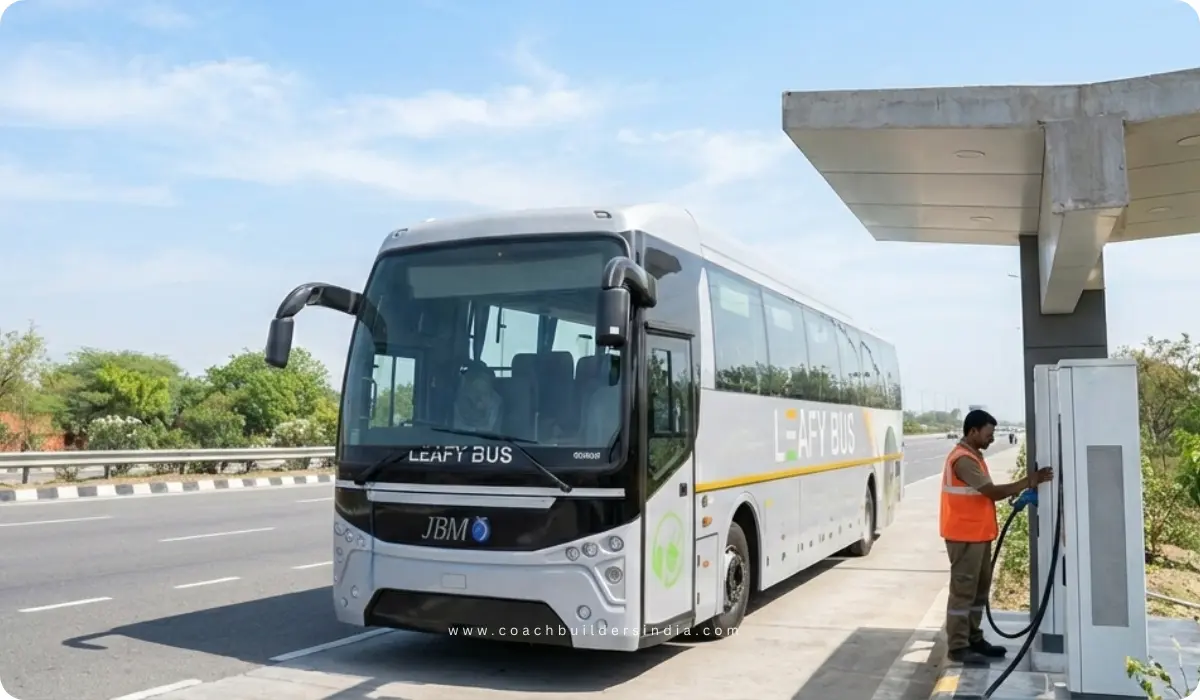
When we launched LeafyBus in early 2025, our goal was clear, but our path wasn’t – to prove that intercity electric mobility wasn’t just viable, but inevitable.
One year and thousands of zero-emission kilometres later, the data tells a story more encouraging than even we expected.
But beyond the numbers, this first year has reshaped how we think about reliability, infrastructure, and the economics of clean transportation.
| LeafyBus’ First Year of Intercity Electric Operations | |
| Metric | First-Year Performance |
| Total electric kilometres operated | 11.5 lakh km |
| Diesel displacement | 3.59 lakh litres |
| CO₂ emissions avoided | 1,150 tonnes |
| Passengers carried | 1.65 lakh+ |
| Fleet utilisation vs conventional benchmarks | 33% higher |
| Highest distance covered by a single e-bus | 2.8 lakh km |
Early Assumptions VS Real-World Outcomes
We began with the assumption that intercity electric bus operations would face the same constraints that once limited early city EV adoption – limited range, charging downtime, and uncertain consumer perception.
Instead, our buses have run with over 90% utilisation across several high-frequency routes, outperforming legacy diesel services in both uptime and cost efficiency.
The predictability of electric drivetrains has reduced unscheduled maintenance dramatically, and passengers consistently rate the ride comfort and quietness as their top reasons to switch.
Our first-year data shows that energy costs per kilometre are over 50% lower than comparable diesel operations. But what’s even more important is how this reduction plays out when scaled across sustained, high-utilisation corridors.
Predictable charging schedules, regenerative braking in hilly terrain, and digital route planning together create an operating rhythm that’s both consistent and cost-stable – something diesel fleets rarely experience given volatile fuel prices.
What stood out most was how predictability becomes a profit lever in electric bus operations. With every route becoming more data-driven, we can schedule energy, staff, and maintenance with a precision that lowers both cost and downtime.
In hindsight, the real revolution isn’t just in electrifying the vehicle – it’s in electrifying the operating mindset.
Strengthening Bus Safety in India is A Systemic Responsibility Says Dr. Harish Sabharwal of AIMTC
Changing Intercity Bus Economics
Higher fleet utilisation is rewriting the economics of intercity travel. Historically, most bus operators have relied on thinner margins and price-sensitive segments to stay competitive.
But electrification flips this equation! When your largest variable expense (fuel) turns into a fixed cost (electricity), scale amplifies efficiency rather than risk.
This creates a new kind of “operational elasticity”, where sustainable fleets can grow faster without proportionally higher expenses.
For independent operators and state transport undertakings alike, that represents a major opportunity to modernise intercity mobility while improving financial sustainability.
2025 Year-Ender: The Highs, Lows, and Turning Points of India’s Bus Industry
Why Electrifying Highways Matters as Much as Cities
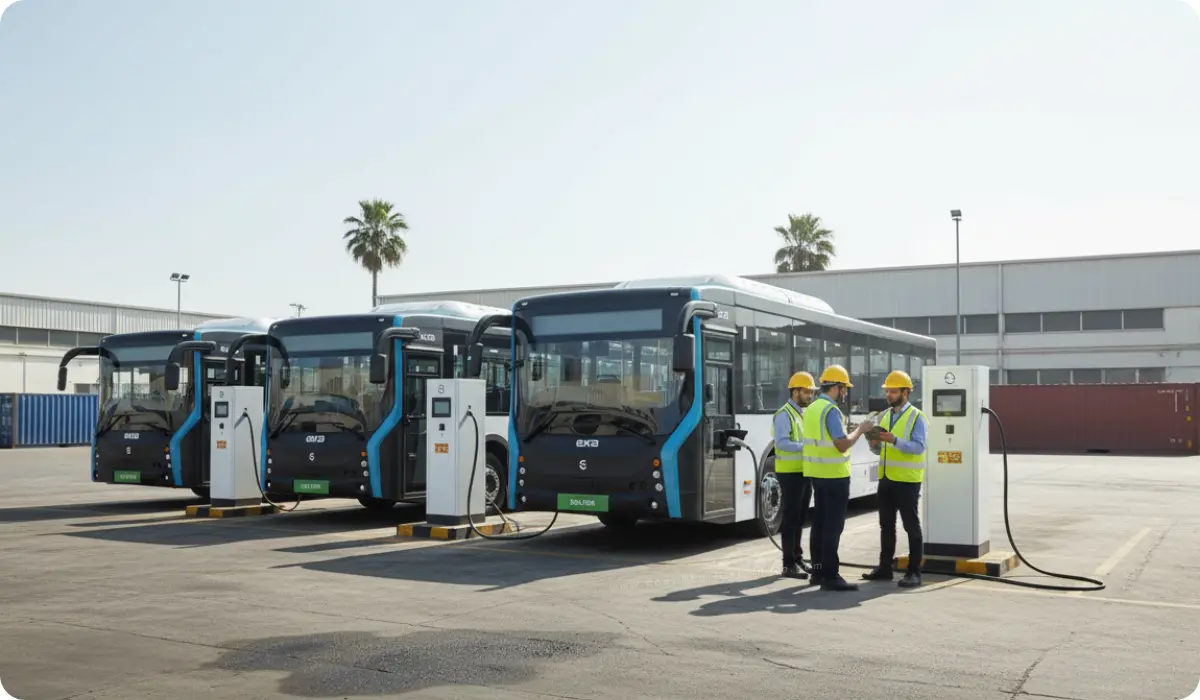
Currently, much of India’s EV conversation still focuses on urban mobility – city buses, ride-hailing, and delivery fleets. Yet, intercity travel contributes significantly to vehicular pollution and diesel consumption.
The same highways that connect India’s economic hubs can also be the backbone of clean mobility infrastructure, with interoperable charging hubs, highway electrification corridors, and grid support incentives enabling long-haul electric vehicle operations.
Every electrified highway kilometre unlocks not just cleaner travel, but regional economic benefits – from renewable energy integration to new energy service models.
This is where the next phase of policy focus must land: enabling intercity electric mobility to thrive, not just survive.
Why This Matters Now
Air quality is no longer an abstract policy issue – AQI readings are now part of everyday discussion in homes and offices. As smoke maps get darker, the public expectation for tangible climate solutions is rising.
Yet intercity buses, the backbone of regional travel for millions, are often absent from the EV discourse.
If cities get green but highways stay grey, the progress will be half-done. Electrifying intercity mobility directly reduces India’s transport emissions footprint while improving passenger experience at scale.
It also signals something deeper, that clean, quiet, efficient travel isn’t limited to luxury urban markets. It can be mainstream!
Bus Safety Requires Collaborative Ecosystem Approach, Says MG Group’s Sivakumar V
One Clear Lesson for Operators
If there’s one message from our first year of electric bus operations, it’s this – don’t wait for perfect infrastructure, start with predictable operations. The technology is ready, the energy economics work today, and the early adopters will define the operational standards for everyone else.
The question is no longer if intercity transport will go electric. It’s how fast we can make the transition, and who will lead it.
After one year of real-world operations, I’m more convinced than ever – when you align economics, experience, and endurance, electric intercity mobility is not just the future, it’s already here.
Catch the latest Bus Industry updates, Exclusive Interviews, Bus News, and International Bus News on Coach Builders India. Download the latest issue of the The Bus Insider magazine for more insights.